Tougher abortion rules in one state are a warning to the rest of the country.
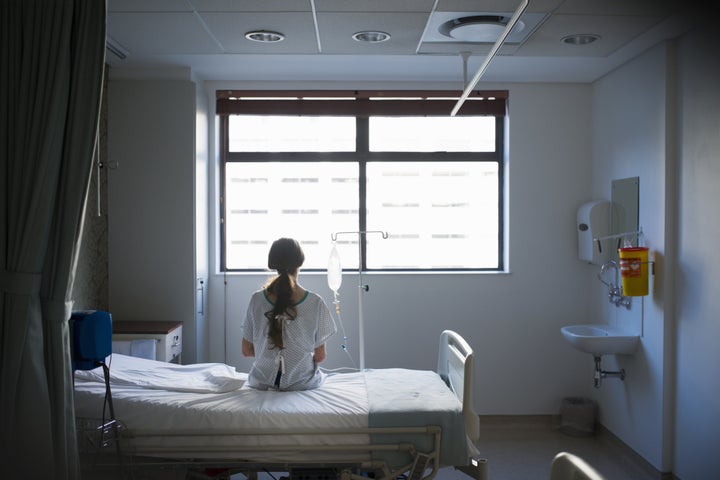
PORTRA IMAGES VIA GETTY IMAGES

Missouri women seeking an abortion regularly head to the Hope Clinic in Granite City, Illinois, 15 minutes from downtown St. Louis. More than half of the clinic’s patients come from Missouri, many looking to bypass their home state’s mandatory three-day waiting period — one of the longest in the country.

That waiting period law became more stringent one month ago, when a deceptively subtle tweak took effect to little notice. It requires that the doctor who will perform a woman’s abortion must also walk her through the state-mandated counseling session three days earlier, rather than giving that task to a qualified nurse, physicians assistant or counselor.

Reproductive rights experts in Missouri and around the country warn that it will take months before they can measure the true impact of this change, but staff at the bustling Hope Clinic are already feeling its effect.

Dr. Erin King, an OB-GYN and the interim clinic director, suggested that more Missouri women might be crossing over to Illinois to escape the onerous requirement.

“I would say in our office today we’re probably seeing double the number of patients we would see on a similar day three weeks ago,” said King, who spoke to HuffPost two weeks after the law took effect. “On the phone, every day since that law went into effect … we have had at least five and 10 patients calling and being upset about it. Or being confused about it. Or wondering what the change was and what is happening.”

Republican state legislators who passed the bill including the waiting period measure in a special session over the summer contend it will help protect the health and safety of women in the state.

For years, Missouri has had only one abortion provider, a Planned Parenthood clinic in St. Louis, although several more Planned Parenthood outposts around the state have begun or will soon begin to offer abortion services. The reproductive health care organization, together with the American Civil Liberties Union, sought to block the law, arguing that it places an “undue burden” on women seeking an abortion, potentially forcing them to drive hundreds of extra miles and delaying their care.

But the law went into effect on Oct. 24 after a judge ruled against Planned Parenthood and the ACLU ― a result that rattled reproductive rights advocates.

“We certainly did not think this was going to be the outcome,” Alison Dreith, executive director of NARAL Pro-Choice Missouri, told HuffPost. “It kind of left the state scrambling to figure out what this means.”

Dreith said she understands firsthand how Missouri’s restrictions can drive women out of state. She opted to travel to Illinois when she had an abortion last year.

Broader research looking at state-mandated waiting periods finds they do not necessarily change women’s minds about getting an abortion. Most women have made their decision by the time they seek care, and most find a way to follow through on it.

“What they do is create hardships for women,” said Dr. Sarah Roberts, an associate professor with Advancing New Standards in Reproductive Health, a research group at the University of California, San Francisco.

Roberts worked on a 2016 study looking at Utah’s 72-hour waiting period, which it found increased women’s financial burden and logistical challenges, and pushed at least one patient past her provider’s gestational limit for abortion. Women ended up waiting an average of eight days between their initial visit and the procedure, Roberts said. She warned about an overall “lengthening and strengthening” of waiting period laws across the country.

In Missouri, the “strengthened” waiting period law will make schedules trickier for busy doctors and resource-strapped clinics. “There aren’t that many highly trained gynecologists who can do abortion procedures, and you’re now taking their time to do all of these consents ahead of time,” King said.

She also noted how unusual it is to mandate that the doctor performing a procedure handle the prior counseling of the patient. “In no other field of medicine is that the case,” King said. “Patients undergo procedures all the time where they are ‘consented’ in a very thorough manner by a trained health care professional who may not necessarily be the exact person doing their procedure.”

Eyes from both sides of the abortion debate see Missouri as a test case for how much leeway states have to introduce new waiting periods and bolster those already on the books. In 2011, not a single state had an abortion waiting period longer than 24 hours, according to Elizabeth Nash, senior state issues manager with the Guttmacher Institute, and only seven states had policies that required women to make two trips to a clinic. Now, eight states have waiting periods of 48 or 72 hours, and seven additional states require at least two visits.

“I think of this as sort of an underground trend,” Nash told HuffPost. “I don’t know if those two words can really go together, but yes, we’ve been seeing more waiting periods. And it hasn’t gotten the kind of attention that some of the other trends have.”

Meanwhile, in her clinic just outside Missouri, King is also waiting to see the full effects of this latest abortion regulation. History leads her to believe she’ll see even more patients fleeing Missouri’s restrictions and walking through her doors. Before Missouri first instituted a 72-hour waiting period, only 40 percent of the clinic’s patients came from that state, she said. By last year, the figure was up to more than 50 percent.

“The thing that is most concerning about [what is happening] in Missouri is that there are what would seem like small changes to the existing law,” Kin said, “but that will make an enormous impact on the patients.”

https://www.huffingtonpost.com/entry/missouri-waiting-period-law_us_5a12f395e4b0e97dffeeebbe?utm_campaign=hp_fb_pages&utm_source=women_fb&utm_medium=facebook&ncid=fcbklnkushpmg00000046

CNN

A few weeks out from Alabama’s special election, Republicans in Washington are walking a fine line. They aren’t directly endorsing Roy Moore, but they’re also not pushing him to drop out of the race. Moore was accused by multiple women of making inappropriate sexual advances when they were teenagers and he was in his 30s, and two alleged he assaulted them. He has vehemently denied all the allegations, and many conservatives have stood behind him during this time, including a Trump adviser who compared child molestation to abortion in his defense of Moore, saying “there’s no moral high ground” between the two.

Stephen Moore, an economic adviser to President Trump, told CNN’s John Berman on Monday that the Republican Senate candidate isn’t any worse than his Democratic opponent, Doug Jones. “I think Judge Roy Moore was kind of a creep, and I think these are obviously very serious allegations against him,” Stephen began. “But I also think that it is appropriate for the people of Alabama to make this decision.” (Stephen Moore has no relation to Roy Moore.)

The economist touted the same argument the GOP has stuck with since the child molestation allegations surfaced: It’s up to the people of Alabama to decide who they want to represent them in the U.S. Senate. Stephen Moore simultaneously called the Republican candidate creepy and disparaged his opponent, making it clear that he wants Roy Moore to win despite his alleged past.

“By the way, the Democrat is no saint, either,” he told CNN, referencing Jones. “The Democratic candidate is for partial birth abortion in a state that’s highly Christian and Catholic. So there’s no moral high ground here.”

Berman replied: “Except one is an alleged child molester.”

However, Stephen doubled down on his claim that abortion is just as bad as child molestation, explaining that many Alabama voters view “partial birth abortion” (a term pro-lifers use to describe dilation and extraction abortions) as “tantamount to murder.”

It’s true that Jones is running on a pro-choice platform and promised not to support national legislation seeking to ban abortion at 20 weeks. As the candidate said in October:

His views on abortion have made it difficult for some Republicans to abandon the GOP candidate to vote for him — in fact, a Republican woman was quoted in the Los Angeles Times saying that she’s “torn between voting for a pedophileand voting for a person who believes in abortion.” A recent JMC Analytics poll also showed that almost 40 percent of Alabama evangelicals are more likely to support Roy following the allegations of inappropriate sexual behavior. Stephen Moore’s argument played into this conservative struggle that prioritizes protecting fetuses over children.

Four women have alleged Roy made sexual advances when they were between 14 and 18 and he was in his 30s. Two additional women claimed he assaulted them, one of whom alleged he forcibly kissed her when she was 18. The Senate candidate has denied all allegations of sexual misconduct, calling it “fake news” and telling Fox News he doesn’t “remember ever dating any girl without the permission of her mother.” Moore even used the allegations as a fundraising tactic, claiming Democrats were spreading lies about him to discredit his campaign.

Although the White House said President Trump believes Moore would “step aside” if the child molestation allegations are true, his administration and most GOP leaders haven’t explicitly called for the Alabama candidate to drop out. Stephen Moore equating child molestation with abortion further highlights how far the party is willing to go to rationalize disturbing allegations against its members.

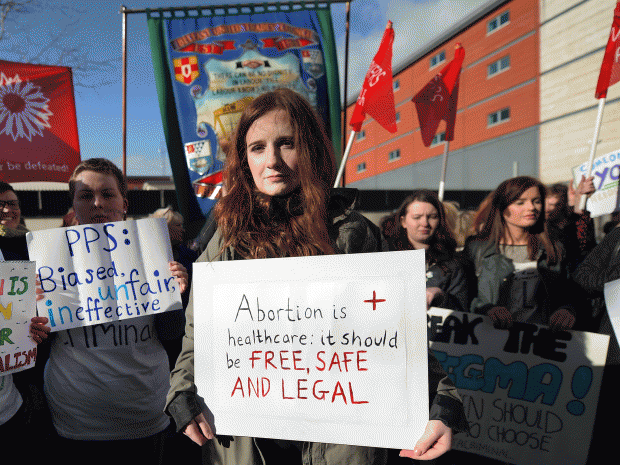
A pro-choice supporter carries a placard which reads ‘Abortion is healthcare, it should be free, safe and legal’ / Getty

Countries where abortion is illegal have slightly higher abortion rates than countries where the procedures are legal, the research found

Making abortion illegal does not reduce the number of terminations women have, a study has concluded.

The research, published in the Lancet medical journal, analysed the abortion rates of countries around the world where abortion is legal and those in which terminations are a criminal offence. It found that rates of the procedures were similar regardless of the legal status of abortions.

In countries where abortions are legal on a woman’s request, 34 women in every 1,000 have one. In countries where abortions are always illegal or legal only if a woman’s life is in danger, 37 women in every 1,000 have one.

The slight increase in rates where abortion is illegal may be due to these countries also tending to have more restricted access to contraception which increases conception rates.

The obvious interpretation is that criminalising abortion does not prevent it but, rather drives women to seek illegal services or measures.

Professor Diana Greene Foster

Professor Diana Greene Foster from the University of California said of the findings: “The obvious interpretation is that criminalising abortion does not prevent it but, rather drives women to seek illegal services or measures. But this simple story overlooks the many women who, in the absence of safe and legal services, carry unwanted pregnancies to term. Women who live in countries where abortion is illegal often have little access to the whole range of family planning services, including contraceptive supplies, counselling, information and safe abortion.”

A spokesperson for Marie Stopes International said: “This study reinforces the fact that restricting access to abortion makes no significant difference to the number of women who choose to have one. Instead, restrictions make it more likely that women will turn to unsafe practitioners, whose methods range from counterfeit drugs to industrial poisons or wire coathangers. Every 11 minutes, a woman dies from complications related to unsafe abortion. In 2016, this is unacceptable and entirely preventable.”

http://www.independent.co.uk/life-style/health-and-families/health-news/women-in-countries-where-abortion-is-illegal-just-as-likely-to-have-one-as-countries-where-it-is-a7025671.html

In Australia we often take the access to contraception for granted. We have to talk about the right to reproductive choice for women globally

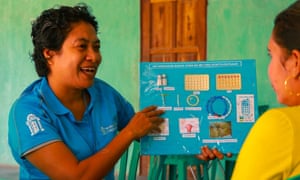
Midwife Mana Malena delivering contraception education in Timor Leste.
 Midwife Mana Malena delivering contraception education in Timor Leste. Photograph: Marie Stopes Timor Leste

With issues of reproductive rights being raised in the senate and abortion law reform on the agenda for the election in Queensland on Saturday, it’s time to stop and think about what it might be like if we had no choice in planning our own families.

Earlier this year my wife and I had our first child. She was 37 and I was 39. I couldn’t imagine being better prepared than we were and yet today our house looks like one of the Wiggles exploded inside it and we are both very, very tired. I often asked myself, how would I ever have coped as a teenage father? What would my life be like if I had not one, but 10 children? While I can never know the answer, my job has given me some reliable insight; it would probably be really tough.

Over the years I have spoken with many women and men in quite a few countries who have come to Marie Stopes for contraception.

In urban areas they come to our clinics and in rural or remote settings we take our services to them. I have heard stories of terrible tragedy, of great optimism and of much in between. In Papua New Guinea I have spoken to women who were afraid for their lives because they knew someone who had died during childbirth. Indeed, I met a woman who had been told by a local health worker she would “probably die” if she became pregnant again. I have met men who worried deeply about conflict in their villages as the population grew and land became scarce. In Cambodia I have met young factory workers who can only afford to keep their children in school as long as they can keep working. In Myanmar I have met aspirational students who are the first in their families to go to university and are not at all ready to get married. The need to control their own fertility, and the challenge to do so, binds this diverse group together.

So today I no longer take the ability to plan my family for granted. And nor should I – reproductive rights are not guaranteed anywhere. Not in Australia, where senator Cory Bernardi recently introduced a motion intended to undermine abortion rights for Australian women. His series of proposals covered abortion funding, greater scrutiny of the activist group GetUp, and White Ribbon Australia’s support for abortion, including late-term terminations. And reproductive rights are certainly not guaranteed in the US, which has rolled back employee rights to contraception in their healthcare coverage and slashed support to family planning programs in developing countries.

We need to fight to keep our current rights but should also fight to extend that franchise to others. Family planning is fundamental to both individual empowerment and national development and yet is somehow regularly overlooked by bureaucracies or targeted for elimination by conservative forces. There are 214 million women in the developing world who don’t want to have a child right now but don’t have access to family planning. As a result they are less able to control their futures. Their health, education, employment prospects and very standing in society will all be impacted by something Australians so often take for granted – the ability to choose.

When a woman can control when she has children, she can control her future – complete her education, pursue a career, run her own business or spend time with the children she already has. Marie Stopes International Australia has launched the #mychoice campaign. It is centred on a video that highlights the stark difference between Australia and developing countries in access to contraception methods that we often take for granted. We want to start a conversation with Australian women about what reproductive choice means to them. Because every woman has the right to decide when she will reproduce.

Chris Turner, Executive Officer and Regional Director Marie Stopes International

https://www.theguardian.com/commentisfree/2017/nov/25/when-a-woman-can-control-when-she-has-children-she-can-control-her-future?CMP=share_btn_fb

In order for any of us to have a taste of reproductive justice, it must be available to all of us.

I’m proud to be a Black, Southern, queer, trans man who uses “he” and “him” pronouns, has had an abortion, and is currently preparing my body to get pregnant. That might sound like a lot to some people, but it’s me. I’m a unique mix of many identities that are often misunderstood, misrepresented, or even completely erased. After multiple decades fighting for self-determination and dignity, I’ve finally reached a point where I’m comfortable and proud of the way I carry those identities.

I am trans resilience. And now, I am preparing my body to transition again and be resilient to carry the next generation of resistance.

My reproductive justice journey began early. When I was born, the doctor incorrectly assumed that my gender was girl, so that’s how I was raised and socialized. I grew up playing teacher with my stuffed animals and enjoyed babysitting nieces, nephews, and cousins. I loved babysitting, it made me feel like my cousins were trusting me with the most important people in their lives. Some of my best memories are taking care of my younger family members.

Growing up, I never wanted to be a mother. I didn’t have anything against mothers; I just didn’t feel the desire to be one. My own mother is a true role model. She was the most consistent provider, protector, teacher, and healer in my life growing up. Our family had everything we needed and most of what we wanted. I definitely get my big heart and capacity to love something about everyone from my mother.

I will be a “Baba” to my future children. Baba means father in many of the African languages in Southern Africa. I will do everything in my power to make sure my future children are loved and taken care of. I will be a more open-minded Baba than my mother was to me; I will trust them to make the best choices for their lives. My children will know that regardless of who they grow up to be, that they will always have my love.

During my formative years, I was very much a tomboy. I didn’t fit in any traditional “boy” or “girl” boxes; I was content somewhere in the middle. As I got older, I began to identify as a lesbian or queer, but that still didn’t feel quite like the whole picture. In March of 2015, I began getting weekly testosterone shots to medically transition from female to male. Now, I realize that my gender has always been fluid.

Over these last few years, I’ve been helping my friends and family get to know me as a man. It fits, it feels good, and I love myself now more than ever. I feel affirmed, and yet the gendered lens of reproduction complicates how people view me.

My journey to pregnancy isn’t the first time I’ve taken control of my reproductive future. During my junior year of college, I was sexually assaulted, which resulted in an unwanted pregnancy. I was already dealing with a depression brought on by the assault when I found out about the pregnancy. I felt completely out of control of what was happening to my body. Being pregnant felt like a reminder of all of the power I didn’t have. I was spending my days trying to find reasons that life was still worth living and to get out of bed. I wasn’t sure that this was a world I wanted to live in, so I definitely wasn’t going to bring an innocent baby into this mess. I made the decision to have an abortion.

Eventually, I realized that while I did not want to become a mother, I very much wanted to be a parent. I want to carry and give birth to a child. I want to love and raise and protect that child to the best of my ability.

In June of this year I decided to stop taking my testosterone shots in order to get my body ready to become pregnant and give birth. My body has always been in a constant state of fluctuation and adjustment, the only difference is now it’s on my own terms.

I believe preparing myself for fatherhood is more than making changes to my physical body. For the last year and a half, I have been working on a personal commitment to love myself so deeply that others are inspired to love themselves just as deeply. Loving myself deeply has opened my eyes and allowed me to receive all of the love and support that is around me. I know that I am a part of a community that will help to raise my future children so the responsibility doesn’t weigh as heavily on my shoulders and feel like it is all on me.

I’ve gotten to a place in my life where I am much more open about having had an abortion and preparing my body for pregnancy. Unfortunately, the spaces and conversations created for people who share these experiences focus almost exclusively on women.

I am not a woman.

It is so important for trans people to be included in the conversations about reproductive justice. Everyone that has the ability to create and terminate pregnancies should feel welcome, whether we identify as women or not.

A few months ago, I became a storyteller for We Testify. Members of this cohort, a project of the National Network of Abortion Funds, are all people who have had abortions who want to tell our stories as a way to help normalize abortion in the mainstream media. We are committed to fighting for access to abortions for all folks who need them. I was welcomed into We Testify as my whole self, and allowed to be vulnerable about my pregnancy journey.

My story is one that so many trans and nonbinary people face as they navigate our world, sometimes not being truly seen until after they’re gone or have experienced violence. A new report from the Trans People of Color Coalition and Human Rights Campaign found that at least 25 trans people have been killed since the beginning of 2017—more than in any year in at least a decade, according to the report. Documenting the stories of those lives lost is critical. But it’s also crucial that our resilience is recognized and honored while we’re still here to see it. That is why, for Trans Day of Remembrance, we no longer only remember the dead. We also recommit to “fighting like hell for the living” and celebrating Trans Day of Resilience. Our resilience includes the ability to create families on our own terms and raise future generations.

We must reflect on our struggles and ensure that all of us have the ability to decide if, when, and how to become a parent, on our own terms. I believe this is at the core of reproductive justice: In order for any of us to have a taste of reproductive justice, it must be available to all of us. We must honor trans people as we are, while we are here, in every expression of our gender identity and reproduction. Honoring our resilience is resistance and remembrance.

https://rewire.news/article/2017/11/20/reproductive-justice-trans-resilience/

A Catholic university in Ottawa is under fire after it refused to allow organizers of a birthing festival to show an award-winning documentary about an abortion provider.

A Catholic university in Ottawa is under fire after it refused to allow organizers of a birthing festival to show an award-winning documentary about an abortion provider.

Matt Rourke / The Canadian Press / AP

A Catholic university in Ottawa cancelled a contracted screening of an award-winning documentary about a doctor who provides abortions at sea and told organizers that they could either change the film or go somewhere else.

For the last six years, organizers behind the festival Choice have booked the amphitheater at Saint Paul University to host panels and film screenings with the goal of sparking discussion and better awareness of the options available in birth and child-rearing.

Located centrally in downtown Ottawa, Saint Paul is a Catholic university on several main bus routes that festival organizers say offers enough space so they do not have to turn anyone away who wants to attend panels or screenings.

Wendy Jolliffe, a volunteer with the Choice film festival, told Global News the university has always been “excellent” to organizers and never before told them what they could or could not show at screenings.

Past films have included documentaries about breastfeeding, maternal mental health, myths about childbirth and different methods of giving birth.

But on Wednesday, after the university learned the organizers planned to show a film that discussed abortion at the screening on Saturday, the school sent an email telling organizers to either pick a different film or choose another venue.

“What they said in the email was, ‘we’re sorry, we had to cancel the evening — or change the film,” said Jolliffe.

The film in question, Vessel, tells the story of Rebecca Gomperts, a doctor who began providing abortions at sea after witnessing the dangers women seeking abortions face in countries where the procedure is illegal.

It premiered at the South by Southwest Film Festival in 2014 and won both the Audience Award for Documentary in Competition and a Special Jury Award for Political Courage, and is available on Netflix in Canada.

WATCH BELOW: Vessel trailer

Jolliffe said in conversations with Saint Paul administrators, she quickly got the impression that forcing them to pick a different venue or cancel the screening may not have been the university’s idea.

“From what I understood it was completely out of their hands,” she said. “It’s way up in the Catholic Church. Exactly what level it was, you’d have to check with them but I get the impression it was very high. It was not something they could control at the university.”

The Ottawa Birth and Wellness Centre, located in the city’s southeast, ultimately agreed to host the Saturday screening but organizers say the smaller venue means they may have to turn people away.

A spokesperson for Saint Paul University said the decision was made to ask the organizers to find a different venue because the university has a policy of not holding events on campus that could be polarizing or that have the potential to bring protesters.

Global News also contacted Terrence Prendergast, Archbishop of Ottawa and chancellor of Saint Paul University, to ask whether he had any contact with the university on the matter but did not receive a response.

Women’s rights advocates quickly slammed the decision, which comes on the heels of a heated debate about free speech on university campuses in Canada.

Earlier this week, Wilfrid Laurier University was forced to issue an apology after officials there accused a teaching assistant of being transphobic and contributing to a hostile teaching environment after she showed her students a video of a debate held on Ontario public broadcaster TVO last year in which panelists argued for and against the required use of gender-neutral pronouns.

Conservative Leader Andrew Scheer, who included in his party leadership campaign a pledge to withdraw federal funding from university’s that do not protect free speech, called the incident “egregious” and slammed the university.

“To think that we’ve got to the state in Canada where a university would have an inquisition on a young grad student and make comparisons to Hitler, to bully her, to tell her that she committed acts of violence by showing a clip from a public broadcast on a public broadcaster, is ridiculous,” he said.

“I think the stifling of free speech is of growing concern to many people on all sides of the political spectrum.”

Global News requested a comment from Scheer on Saint Paul University’s decision not to allow the film to be shown on campus but has not received a response.

Ottawa Catholic university cancels screening of abortion documentary

With many people spending time with family during the holidays this time of year, abortion rights supporters are craving deep conversations with people they love, and they have committed to engaging in what can be hard talks to help crack through the misinformation and disagreements about abortion.

In this post-election landscape, the National Network of Abortion Funds(NNAF) has been asked many times how people can help our mission and support our work. One of the best ways is to have discussions about your support for abortion access. With many people spending time with family during the holidays this time of year, abortion rights supporters are craving deep conversations with people they love, and they have committed to engaging in what can be hard talks to help crack through the misinformation and disagreements about abortion. Here are a few starting points from some of our member funds.

One-on-one conversations: “One-on-one is key—I’ve made the mistake of jumping into it at Thanksgiving on a topic where I was the only one in the family who felt the way I did, and it did not go well. Yes, we have a duty to speak up, but we have to be strategic in how we do that,” says Nan Kirkpatrick of the Texas Equal Access Fund. Have these conversations with your loved ones in smaller, less charged groups. It reduces the chance for angry conversations and allows people to ask you questions or frame their ideas with less defensiveness. It also gives you the space to converse beyond talking points and rhetoric, and share what your full vision for the future and full reproductive justice for everyone would look like.

Find common ground: Many people share common values, and the information we’ve been given about these topics often automatically divides us more than encourages us to find the issues we do agree on. Rather than assuming the person can’t or won’t share your core values, recognize the building moments that can happen. Prosper Hedges of the Magnolia Fund says, “I take a quick mental survey of our shared values and emphasize those first. My grandparents are vehemently anti-choice Catholics and cornered me earlier this year about the work I do. They said such inflammatory things (like ‘heart rate begins an hour after conception’), but from their teary eyes and clasped hands I could tell that a quick, scientific takedown would only ostracize them further. However, I know that part of their faith is a firm default to the judgment of a higher power, and a refusal to cast the first stone. I told them that my faith is similar—I always have faith in the ability of the person I’m speaking with to assess their own needs, and I don’t need to understand more than that. This opened up a conversation about birth control and sex education that I never would have thought possible prior.”

Maia Elkana of the Gateway Women’s Access Fund says “my family is ‘pro-choice’ so I’m lucky in this regard, but abortion funding was new to them, as is a reproductive justice framework. My dad watches a lot of Fox News and has come to believe some of the more offensive things he hears on TV, but he’s a father who raised two girls mostly on his own and he’s naturally a caring and empathetic person. Talking about access to care and the economic impact on women and families, and widening it out to violence prevention and school readiness, to make the connection to my day job work as a social worker, has really helped me in my conversations with him.”

Almost always, these will be years of continuing conversations rather than one persuasive argument you can make that will hit them like lightning and change their mind. You have to be invested enough in change to meet people where they are and keep pushing.

Oriaku Njoku of Access Reproductive Care – Southeast says, “Having family who is religious and from Nigeria, talking about my work was a bit frightening at first. But the thing that made it easier was being grounded in the reproductive justice framework. Being able to use intersectionality to make connections between abortion access and race, gender, poverty, and other issues impacting folks in our community makes this conversation easier. It’s more than choice. It’s more than abortion. In fact, my mom went from being someone who was damn near pro-life to wanting to open a pregnancy resource vector like All-Options Pregnancy Resource Center in Bloomington because she sees how it’s all connected. Pretty cool …”

Be a resource for information when people have questions: When you come across a great article or book, bookmark it and save a list for the moments when people ask you for resources.  Refinery29 recently hosted a Tumblr Q & A session with reproductive rights leaders—including NNAF Executive Director Yamani Hernandez and We Testify abortion storyteller Jack Qu’emi Gutierrez—and the resulting answers are a really incredible conversation about the logistics, laws, barriers, and feelings around abortion, from people with real questions. They are worth keeping and sharing with people who need answers. Angie Hayes of Clinic Access Support Network says, “I also like to make ‘trades’ with my family to get them to read things. I say, ‘I’ll read something you give me (on a topic they are trying to change my mind on); if you read this, then we can discuss,’” and she shares this piece with people who might be questioning anti-abortion faith movements. Trina Stout of The CAIR Project says, “With racism a barrier to access, and not a lot of white people connecting those dots, white people have a lot of work to do talking to other white people. Here’s a resource.

Remember people are listening: Even if a conversation isn’t going well , often there are others around you who are silently gathering strength from you. Statistics tell us that everyone loves someone who’s had an abortion. When someone else is vocally anti-abortion, what they’re telling those around them is that they’re not safe spaces to share abortion experiences or feelings. That’s heartbreaking. The good thing is you can be the opposite. When you affirm that you trust people in their reasons for having abortions, that you know there are barriers to access that can make the experience difficult, and that you are a safe space for conversations, questions, and crisis, you’ve just comforted someone around you, maybe without even knowing.

“I remember one Christmas when my family was having a heated discussion about the women who accused Bill Cosby of sexual assault. Some of my family members said they were only sharing their stories for greed, and I became upset,” explains Renee Bracey Sherman, senior public affairs manager at NNAF. “I told my family, “There are people in our family who have experienced sexual assault and when they hear you talk like this, it makes them not want to come forward. It’s why I didn’t come forward about a toxic relationship I was in. It’s why I kept my abortion a secret for so long.’ After I said that, the conversation calmed down, and a few people started realizing how their words might be impacting others around them.”

“Even when I’m being disrespected or disagreed with, I think about the younger people in my life. I think about my cousins that are listening, teens that might hear or read what I’m saying, family members who may not feel comfortable sharing their experiences,” says Lindsay Rodriguez of NNAF. “I never want them to think the people who are judging them for decisions or questions are the only voices out there. Even if they never need me, I want them to know I’m here if they do. I want other people around me to know I trust them, and I’ll fight for and with them every day. The worst thing we can do to people seeking abortions is make them feel alone.”

NNAF members are often well-versed in these conversations; we have family like everyone else, and not all of them are as supportive as we’d like them to be. But often they are curious as well. Many abortion funders have experiences with family and friends who want to ask questions, and for the first time have someone to turn to. Often, one of the biggest ways abortion rights supporters can help move the cause forward is by voicing your support, often and without judgment; the people in your life who have questions will find you. We all have experiences with people we’d least expect asking us questions, sharing stories, and quietly voicing their support to us.

These conversations are critical for people who don’t feel like they have other safe spaces to talk about abortion. We can be harbors of support, springs of information, vaults of stories. Abortion funds are raising money to ensure people are getting access to abortion, but they’re also doing critical culture change work; abortion funders are expanding the often singular narratives and deepening empathy. And those are things we can all do. In times of stress and strain, our conversations and our relationships will nourish us.

https://rewire.news/article/2016/11/23/talk-family-abortion-holidays/

U.S. District Judge Lee Yeakel accused lawmakers of requiring a patient seeking a second-trimester abortion to undergo an “unwanted, risky, invasive, and experimental procedure.”

A federal judge ruled on Wednesday that parts of a Texas law banning the most common type of second-trimester abortion care are unconstitutional.

The permanent injunction from U.S. District Judge Lee Yeakel was handed down just hours before the temporary restraining order blocking the state from enforcing the provisions was set to expire. The act, Yeakel wrote, “intervenes in the medical process of abortion prior to viability in an unduly burdensome manner.”

Nancy Northup, president and CEO of the Center for Reproductive Rights, said in a statement that the ruling was the latest blow delivered to an “unrelenting and coordinated political agenda” that seeks to restrict reproductive rights.

“The court’s decision once again makes clear that politicians cannot force their way into private medical decisions that should stay between patients and physicians,” Northup said. “Access to vital reproductive health services should not depend on a woman’s zip code, and today’s decision ensures Texas women can continue to seek the care they need and deserve.”

Among other provisions, SB 8 prohibits physicians from performing a so-called dismemberment abortion—a phrase popularized by anti-choice organizations—unless necessary in a medical emergency. The law targets a procedure known as dilation and evacuation (D and E), the most common method of performing second-trimester abortions.

The provisions were based on copycat legislation drafted by the National Right to Life Committee, an anti-choice organization that has successfully lobbied GOP lawmakers in eight states to pass similar bills.

Judge Yeakel, appointed to the court by President George W. Bush, wrote in the 27-page opinion that the act would require pregnant people to “endure a medically unnecessary and invasive procedure,” creating an undue burden.

The judge specifically took issue with the state’s claim that the D and E procedure could be performed if a physician induced “fetal demise.” Physicians who testified during the five-day trial earlier this month characterized that requirement as “uncharted territory” that would increase risk and delays, reported theTexas Tribune.

“The court concludes that requiring a woman to undergo an unwanted, risky, invasive, and experimental procedure in exchange for exercising her right to choose an abortion, substantially burdens that right,” Yeakel wrote.

The Center for Reproductive Rights (CRR) and Planned Parenthood Federation of America (PPFA) in July filed the lawsuit on behalf of several Texas abortion providers.

Among the plaintiffs is Whole Woman’s Health, the abortion provider that became synonymous with the landmark U.S. Supreme Court decision in Whole Woman’s Health v. Hellerstedt, in which the court struck down the anti-choice omnibus law known as HB 2.

Amy Hagstrom Miller, president and CEO of Whole Woman’s Health, said in a statement that the ruling was a victory for women and families in Texas.

“Today the court ruled on the right side of medicine and was just another step in ensuring that all Texans are given the dignity and respect they deserve to make their own healthcare decisions,” Hagstrom Miller said.

Texas Attorney General Ken Paxton (R) announced shortly after the ruling that his office had already filed a notice of appeal with the U.S. Court of Appeals for the Fifth Circuit.

“We will defend Senate Bill 8 all the way to the U.S. Supreme Court, if necessary,” Paxton said in a statement.

https://rewire.news/article/2017/11/22/judge-rules-unconstitutional-texas-ban-method-abortion/

“I think Georgia must explain exactly how granting tax payer dollars to CPCs will improve maternal health outcomes in our state, with no regulation or accountability attached, all while we still have one of the highest maternal mortality rates in the country.”

Georgia is the latest state to provide taxpayer funds to anti-choice fake clinics, commonly known as crisis pregnancy centers (CPCs), which use misinformation to dissuade people from seeking abortion care.

But new research on Georgia’s fake clinics found that organizations eligible to receive millions in state funding often advertise limited health care services and provide medically inaccurate or misleading information.

The study, published Monday in Women’s Health Issues, found that most anti-choice clinics in Georgia offer few services beyond pregnancy testing and counseling. A majority of these facilities, according to the study, promote false or misleading information to pregnant people.

“Our analysis revealed numerous concerns about advertised services and accuracy of the health information presented on Georgia crisis pregnancy center websites,” Andrea Swartzendruber, the study’s lead author and an assistant professor at the University of Georgia College of Public Health, told Rewire in an email.

“Although our study does not provide information about the types and quality of services actually provided at Georgia’s crisis pregnancy centers, it reveals that they often offer false and misleading, and potentially harmful, health information,” Swartzendruber said.

The researchers identified 87 fake clinics in the state and analyzed the content of 64 websites.

Nearly every anti-abortion clinic in the study advertised pregnancy options counseling and pregnancy testing. But just 42 percent of the websites informed clients that the organizations do not provide or refer clients for abortion services.

The study found that 53 percent of fake clinics’ websites included “false or misleading statements regarding the need to make a decision about abortion or links between abortion and mental health problems or breast cancer.”

Seventeen clinics provide abortion services in Georgia, according to the Guttmacher Institute.

The Feminist Women’s Health Center in Atlanta offers a full spectrum of reproductive health care. Like most Georgia facilities that provide abortion care, it’s located in a major metropolitan area.

Kwajelyn Jackson, community education and advocacy director at the Feminist Women’s Health Center, told Rewire she believes anti-choice clinics are “not equipped” to give medically accurate information or advice to the clients they serve.

“We have heard from people who went to CPCs for wanted pregnancies who were still lectured about abortion during their visits, given inaccurate information, and misdiagnosed, sometimes to devastating results,” Jackson said.

Gov. Nathan Deal (R) signed a bill in April 2016 to establish the “Positive Alternatives for Pregnancy and Parenting” grant program to promote pregnancy and parenting services as alternatives to abortion care.

Life Resources of Georgia, a self-described “pro-life Christian organization,” was awarded a $189,400 contract in August to distribute $3 million in grants. Life Resources can exercise a significant degree of discretion in determining which organizations receive funding.

Life Resources of Georgia did not respond to requests for information or comment.

There are about 70 “pregnancy assistance organizations” in Georgia that may qualify for grant money, according to Georgia Life Alliance. The state health department lists 50 organizations, provided to the department by Georgia Life Alliance in 2015, that offer free ultrasounds for pregnant people.

Nancy Nydam, director of communications for the Georgia Department of Public Health, told Rewire in an email that the department’s Family Planning program oversees the contract awarded to Life Resources of Georgia. The organization, she said, is “working to have the subcontracts in place” by December 1.

The Georgia Department of Public Health’s Family Planning program offers residents assistance in accessing comprehensive services, including “effective contraception methods.”

But, according to the study’s findings, none of the anti-choice clinics’ websites advertise contraceptive methods approved by the FDA. The contraceptive services advertised on fake clinic websites were limited to counseling about emergency contraception and natural family planning—on 11 percent and 3 percent of anti-choice clinic websites, respectively.

Swartzendruber said the services described on fake clinics’ websites do not appear to align with prevailing medical guidelines.

“The study’s findings suggest that careful monitoring and increased regulation of Georgia’s pregnancy resource centers may be warranted to ensure quality health information and services and fiscal responsibility of public funds,” Swartzendruber said.

Jackson also asked for more accountability from the state of Georgia.

“I think Georgia must explain exactly how granting taxpayer dollars to CPCs will improve maternal health outcomes in our state, with no regulation or accountability attached, all while we still have one of the highest maternal mortality rates in the country,” Jackson said.

Georgia also has one of the highest rates of HIV infectionsteen pregnancy, and infant mortality.

https://rewire.news/article/2017/11/21/study-georgia-funds-anti-choice-fake-clinics-doling-potentially-harmful-information/

“Location, location, location,” St. Gerard’s board chair and medical director, Dr. Judith Mascolo, said. “It’s all about business. We go where the women are.”

In Hartford, Connecticut, two doors face each other across a brick courtyard.

Signs in similar colors and font bear the names “Hartford Women’s Center” and “Hartford GYN Center.”

Behind one of these doors is an abortion clinic; behind the other, a crisis pregnancy center (CPC), or fake clinic, whose purpose is to deter patients from abortion.

When patients arrive for appointments at Hartford GYN, the abortion clinic, anti-choice protesters and CPC volunteers try to corral them into the fake clinic. There, according to testimonies collected by pro-choice advocates, representatives frighten these patients with misinformation, telling them that abortion is a sin and that they might not make it out alive. So aggressive are the clinic’s tactics that they even once waylaid a bewildered payroll company employee on her way to a meeting with another organization in the same complex, telling her that they could help her.

Hartford Women’s Center is part of St. Gerard’s Center for Life, an affiliate of Heartbeat International, which describes itself as the largest network of crisis pregnancy centers in the world. Its members are trained to conceal their true intentions by opening near abortion clinics and ditching religious content. The clinic’s name and location, and the medical scrubs sometimes worn by its representatives, appear designed to confuse people into mistaking it for the abortion clinic that stands just yards away.

Now city officials are trying to address the misinformation.

Hartford is the latest city to consider legislation to prevent fake clinics from deceiving patients. Similar attempts have faced legal challenges, including a case now before the U.S. Supreme Court that could determine whether these clinics can keep lying to patients nationwide. Hartford officials say they are confident their measure will stand up in court—and they are willing to fight to defend it.

The ordinance would ban fake clinics from using false or misleading advertising and require them to disclose in the entrance, waiting area, and on advertisements whether they have a licensed medical provider on the premises, with penalties of up to $100 a day for non-compliance.

On Monday, scores of people packed into a public hearing on the ordinance at Hartford City Hall, some in purple “Trust Women” shirts and others in yellow with stickers showing their support for the state’s crisis pregnancy centers. Among Hartford residents, who were allowed to speak first, ordinance supporters outnumbered opponents by a ratio of about three to one.

Among those supporters was Erica Palmer, who said she has been targeted by individuals gathered outside the fake clinic while walking in the area with her son.

Erica Palmer speaks at Hartford City Hall.

“Just this summer, I’ve been followed on foot by the representatives who demanded to know whether I was there for an abortion or birth control, been told that my choices were damning me to hell, estrogen and birth control cause cancer, and that they can reverse the [abortion] pill,” Palmer said.

Abortion pill reversal, an unproven protocol promoted by anti-choice groups, is among the services listed on St. Gerard’s advertisement cards, along with free pregnancy tests, ultrasounds, and “help recovering from post-abortive trauma,” a purported condition that is unsupported by evidence.

Palmer also read aloud a statement by her 9-year-old son, Donovan, about how the anti-choice people “stalked us to the car” and “made me feel worried for my mom and anxious.”

Another Hartford resident who supports the ordinance, Kamora Herrington, told the city council about how she saw an ad for pregnancy support when she was pregnant at the age of 18. After calling the number on the ad, she realized that the person on the other end of the line had an anti-choice agenda.

“When I got off the phone with that person, I was more lost than I was when I got on the phone,” Herrington said. “I believed that there was truth in advertising.”

St. Gerard’s denies that it engages in deceptive practices and says that the medical services it offers—pregnancy tests and ultrasounds—are performed by licensed medical personnel who undergo ultrasound training from anti-choice organizations.

Rewire asked St. Gerard’s executive director Leticia Velasquez why the organization chose the name “Hartford Women’s Center.”

“Some women, when they see a saint’s name, even devout Catholics, they feel that they’re going to be judged,” Velasquez said, adding that the organization is in Hartford, and, “We love women.”

Pressed on whether the new name was chosen for its similarity to the abortion clinic’s, Velasquez demurred.

“We like to say that this is who we are,” she said. “We have a right to it.”

When asked why the center was located so close to Hartford GYN, St. Gerard’s board chair and medical director, Dr. Judith Mascolo, told Rewire that it’s “where the women are.”

“Location, location, location,” Mascolo said. “It’s all about business. We go where the women are.”

In public Facebook comments, Velasquez has touted the CPC’s coffee bar as a tactic “to lure abortion minded women off the path to the abortion clinic.” Asked by Rewire about the postings, she said she regrets using that phrasing.

“That was a poor choice of words,” she said. “But I want them to come in, because we want to love them.”

Hartford’s debate comes at a pivotal moment for efforts to regulate these centers.

Last week, the U.S. Supreme Court agreed to hear the right-wing litigation mill Alliance Defending Freedom’s challenge to a California state law that requires fake clinics to disclose if they are not licensed medical facilities, and display information about free or low-cost access to abortion and contraception.

Other efforts to regulate these centers in Hawaii; Baltimore and Montgomery County, Maryland; and Austin, Texas, have also faced legal challenges.

But Hartford Mayor Luke Bronin said the city modeled its measure on city ordinances that have withstood such challenges in New York City and San Francisco.

An appeals panel this year upheld San Francisco’s ordinance banning false or misleading advertising by fake clinics, and the U.S. Court of Appeals for the Second Circuit upheld New York City’s requirement that these clinics inform patients whether they have a licensed medical provider on staff. That’s the same court that could consider Hartford’s ordinance.

“I think it’s a pretty simple and pretty basic proposition that women who are making decisions about their health care and their future should not be subject to deception,” Bronin told Rewire in an interview.

But Rewire found enforcement of these measures has been uneven at best.

Just last week, the agency charged with enforcing New York City’s ordinance testified before a city council committee that it has issued only two notices of violation after fielding complaints about nine facilities and conducting 21 inspections. Most of the facilities visited were not required to post the disclosure because regulators determined they did not meet the legal definition of pregnancy resource center—which the Hartford ordinance copies.

That definition requires facilities to offer ultrasounds or prenatal care, or to meet two of six criteria indicating it appears to be a medical facility, in order to be subject to the law. New York did not start enforcing its ordinance until last year, due to the litigation.

Planned Parenthood of New York City said its examination has shown no crisis pregnancy centers in the city have actually posted the required disclosure.

In San Francisco, the city attorney’s office told Rewire it has sent just one warning letter to a crisis pregnancy center—and that was in 2011, when the ordinance was first introduced. It’s been in effect for six years.

Hartford Mayor Bronin told Rewire he will work with the city’s incoming director of the Department of Health and Human Services to ensure enforcement is “effective and appropriate.”

Meanwhile, organizers at Hartford GYN have boosted their escort program, positioning volunteers outside to usher the clinic’s patients in the right direction. They have also been documenting the stories of patients who are waylaid by the fake clinic.

“They have been given false medical information, they’ve experienced shame, they’ve been pressured about their decision, and have not known in the beginning that they were in the wrong place,” Erica Crowley, who serves as both an organizer for NARAL Pro-Choice Connecticut and volunteer coordinator for Hartford GYN, told Rewire.

One 21-year-old patient told Crowley how a fake clinic representative told her that abortion was a sin that she would regret, and that she might not make it out alive if she had one.

Leticia Velasquez told Rewire her counselors do not use that kind of terminology. Another patient said she was offered $50 and a free ultrasound; Velasquez acknowledged that the center did offer such compensation during its ultrasound training.

The stories Crowley has collected also include that of the payroll worker who was on her way to a meeting with NARAL, which is in the same complex. When the worker asked for directions to NARAL, people outside “acted confused as if you were several blocks away,” the employee later told Crowley. “They asked me if I wanted to speak to someone at their office and [said] that they could help me.”

Velasquez did not dispute that account.

“We might have thought she was pregnant,” Velasquez told Rewire. “Saying ‘we can help you’ is not saying ‘you have an appointment.’”

But abortion clinic patients who have mistakenly entered the fake clinic say that volunteers there have referred to them as patients with appointments, Hartford GYN escorts testified at Monday’s hearing.

Hartford’s ordinance takes aim at this kind of deception.

“It’s not a question of whether you agree with abortion or not personally,” Sarah Croucher, executive director of NARAL Pro-Choice Connecticut, told Rewire in an interview. “It’s a question of whether you think that when someone is deliberately seeking a certain kind of appointment they should just be able to go to that appointment, and not be misled on their way.”

https://rewire.news/article/2017/11/21/hartford-ordinance-anti-choice-tricking-abortion-patients/