24-dec

She wasn’t trying to start a revolution. But it was September 2015, the House had just voted to defund Planned Parenthood — and Amelia Bonow found the one-sided conversation exhausting.

“Women like myself were feeling so incredibly angry and disillusioned and helpless about the way that our rights were being taken away from us,” says Bonow, a Seattle bartender and grad student at the time. “It was clear to me I was not using the full range of my voice as a feminist and a woman who’d had an abortion.”

On a whim, she made a Facebook post stating that she’d had an abortion and was not only grateful for it but happy about it. “The narrative of those working to defund Planned Parenthood,” she wrote, “relies on the assumption that abortion is still something to be whispered about.”

Her friend, popular Jezebel writer Lindy West, tweeted a screenshot of the post to her 60,000 followers with the hashtag #ShoutYourAbortion — and a movement was born. Within a few days, the hashtag was used 250,000 times as women all over the world tweeted about their own abortion experiences: the good, the bad, and the unapologetic.

There’s the mother of five who didn’t want more kids. The women whose contraceptives failed or for whom Plan B failed. Those who were raped or in abusive relationships. Women with cancer or whose fetuses had fatal abnormalities. Or who simply didn’t want to have a baby.

“It was an organic explosion of ‘We’re not going to be quiet about this anymore,’” says Bonow, 32, pointing out that most Americans identify as pro-choice. “The anti-choice movement has really capitalized on our silence. And I don’t think they can get away with legislating this issue in a way that is so profoundly out of touch with the lives, values, and experiences of mainstream Americans if we’re actually talking about our abortions.”

Of course, the brazenness of the movement enraged opponents. “There were a lot of people saying, ‘How dare you? You should be ashamed of yourselves,’” says Bonow, who moved out of her apartment for a while after receiving personal threats.

But she makes no effort to soft-pedal her stance — and doesn’t much care how others may judge her. In a piece she wrote for Salon.com, she talks about stealing a pregnancy test from Walgreen’s and getting high on pills before her abortion (“because I like getting high, not because I was scared”).

Does she worry that her brash tone might play right into her opponents’ narrative that abortion is a too-easy out for irresponsible — even immoral — people?

“I’m not trying to shock anyone or make anyone uncomfortable,” says Bonow, who insists that she’s merely a conversation starter, not the new voice of the abortion-rights movement. “I’m just helping women talk about their lives, and there are as many kinds of abortion stories as there are individuals in this world. But my experience is well within the range of a normal experience — and we’ve never been told that’s ok. It seems shocking because we’ve never heard a woman talk about her abortion at all, let alone be casual or flippant about it.”

Bonow hopes to reach out beyond the coasts and urban areas to women in red states who are ready to share their abortion stories — without having to apologize for it, finally.

“Abortion is not a ‘necessary evil,’” she says. “It’s a positive component of a society helping women live their best lives. And we can’t fight against what’s being lobbed at us by saying we’re sorry all the time.”

Amelia Bonow will speak on Wednesday, January 18, at the New Vic (33 W. Victoria St.) at 6 p.m. as part of the Santa Barbara Pro-Choice Coalition’s celebration of the anniversary of Roe v. Wade.

http://www.independent.com/news/2017/jan/11/shout-your-abortion/

Source: Independent

4-jan-17

A new study from the Pew Research Center has found the majority of Americans do not believe the Supreme Court should overturn the historic 1973 Roe v Wade ruling that established abortion as a right for women.

As the US shifts into a Republican presidency, the issue of Roe v Wade and abortion rights continues to be a contentious issue where neither pro-life nor pro-choice advocates can make concessions. But, as the poll indicates, the majority of US citizens do not want to see a woman lose her right to an abortion.

The research found that 69 percent of Americans do not want to see Roe v Wade completely overturned.

Most Americans have supported the Roe v Wade since the ruling 43 years ago, and that support has been growing, despite an increasing amount of restrictions placed on abortion providers. The Pew Research Center conducted a similar survey in 2013 and that study found that 63 percent of Americans did not want to see Roe v Wade overturned.

Support for Roe v Wade is traditionally determined along party lines, with Democrats often being defenders of a woman’s right to choose with Republican lawmakers pursuing legal moves which threaten the court’s ruling. But the Pew Research Center found that the issue is not as clear as it may seem. While 84 percent of Democrats and those who lean Democratic say the Supreme Court should not completely overturn the ruling, 53 percent of Republicans agree.

The Supreme Court case highlights some of the nuances within the Republican Party. As a candidate, President-elect Donald Trump seemed to support overturning the ruling, saying in an interview with 60 Minutes that he would appoint pro-life justices to the bench who would possibly overturn the 1973 ruling, making it a state issue. Fifty-seven percent of conservative Republicans would agree with that line of thinking, but only 27 percent of moderate and liberal Republicans would be on board.

The level of education also appears to play a big role as 88 percent of those with postgraduate degrees did not want to see abortion cease being a federally protected right. Only 62 percent of those with a high school diploma or less feels the same.

Religion is also a large factor – particularly for Protestants. In general, 63 percent of Protestants do not support completely overturning the ruling, but when that group is further divided into white Protestants, that number shifts dramatically to 49 percent who do not think it should be overturned, while 47 percent do.

https://www.rt.com/usa/372614-roe-v-wade-support/

Source: RT

21-dec

Challenges to Roe v Wade presage battles to come in the Trump era

DONALD TRUMP was once a staunch supporter of abortion rights, declaring in 1999 that he was “pro-choice in every respect”. But Mr Trump campaigned for president as an opponent of Roe v Wade, the Supreme Court’s abortion-rights ruling from 1973. (He had a change of heart when he observed that a child of a friend who “was going to be aborted” was instead brought to term and went on to become a “total superstar, a great, great child”.) In post-election interviews, the president-elect has repeated promises to name pro-life justices to the Supreme Court, starting with a replacement for Antonin Scalia, the justice who died in February. After a couple of nominations, Mr Trump said during a debate in October, Roe will “automatically” be overturned and the question of abortion rights will return to the states.

In recent weeks, several states have signalled how they would handle the matter if the nationwide constitutional standard were to disappear. There is little doubt that many states would quickly criminalise abortion. Fresh from a loss in Whole Woman’s Health v Hellerstedt, a ruling from June that struck down the state’s clinic regulations as thinly disguised attempts to limit abortion access, Texas, for one, would jump at the chance. In the meantime, the Lone Star state has passed a symbolic measure to announce its displeasure toward women who exercise their constitutional right.

On December 19th, the same day the electoral college meets to officially elect Mr Trump as the 45th president, new rules go into effect in Texas. The change, an ostensibly innocuous tweak of the “definition, treatment and disposition of special waste from health-care related facilities”, will require fetal remains from abortions and miscarriages to be interred. No more disposing of the tissue in sanitary landfills, the destination of all other biological waste from hospitals and clinics. The Texas Department of State Health Services will now require fetal remains to be buried.

The tissue-burial idea was the brainchild of Greg Abbott, the Republican governor of Texas. Days after the Supreme Court scolded Texas for cynically citing woman’s health as its excuse for clamping down on abortion clinic regulations—rules that would have shuttered more than half the state’s clinics—Mr Abbott composed a fundraising letter introducing the burial concept. “Human life is not a commodity”, the email stated. Owing to an “imperative” that Texas adopt “higher standards that reflect our respect for the sanctity of life”, Mr Abbott wrote, the state “will require clinics and hospitals to bury or cremate human or fetal remains”. Opponents of the rule, he said, “refuse to recognise ANY rights of the unborn”. Lamenting the “soulless abortion industry” in his state and promising to “turn the tides…in defence of life”, Mr Abbott announced his intention to make Texas “the strongest pro-life state in the nation”.

Unsurprisingly, abortion-rights advocates are expressing alarm at these developments. NARAL Pro-Choice America says the burial bill in Texas “unduly burden[s] both abortion patients and providers without any discernable, proven medical benefit”, thereby violating the Hellerstedt ruling from last summer. The same organisation says the Ohio heartbeat bill is a “drastic” challenge to abortion rights. Planned Parenthood is rallying its troops to oppose both measures, along with laws in Alaska, Missouri and North Carolina that look similar to the onerous regulations the Supreme Court struck down in Hellerstedt.Mr Abbott has a formidable competitor in Ohio, a state whose legislature is apparently emboldened enough by Mr Trump’s victory that it has passed what would be the most restrictive ban since Roe: a prohibition on abortion at the point in pregnancy when a fetal heartbeat can be detected. This threshold means that abortion would be available only until the sixth or seventh week—before some women are even aware they are pregnant. The fetal heartbeat bill is a direct assault on the current constitutional rule permitting abortion until about 24 weeks, the point at which fetuses are “viable”, or able survive outside the womb. The ban makes no exceptions for cases of incest or rape. John Kasich, Ohio’s pro-life governor, has until December 17th to sign or veto the bill; if he does nothing, the bill becomes law—and will immediately trigger lawsuits. Mr Kasich has another option: he can veto the heartbeat bill and sign another bill that bans abortion at 20 weeks. While both are inconsistent with Roe, the latter constitutes a subtler attack.

These are the incipient stirrings of a battle likely to grow after Mr Trump is inaugurated on January 20th. A pro-life ninth justice joining the Supreme Court next year will not, by itself, put Roe in immediate danger: the court’s four liberal members and Anthony Kennedy remain a reliable five-justice bloc that will stand up for Roe and its progeny. But with three members of that group—Mr Kennedy, Stephen Breyer and Ruth Bader Ginsburg—aged 80, 78 and 83, respectively, the future of abortion rights in America is anything but secure.

http://www.economist.com/blogs/democracyinamerica/2016/12/roe-rows

Source: The Economist


17-nov

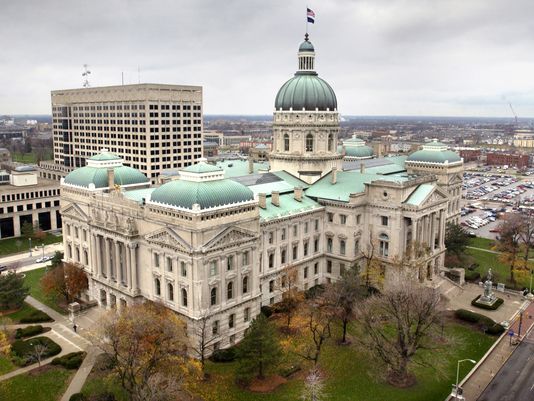
An Indiana lawmaker plans to introduce a bill that would outlaw and criminalize all forms of abortion in Indiana.

State Rep. Curt Nisly said Wednesday he will file so-called “Protection at Conception” legislation when the General Assembly convenes in January.

Under his proposal, all abortions would be a crime and prosecutors could file charges against those who participate in the procedure.

“You would treat the death of an unborn child like you would any other human being,” the Goshen Republican said.

The measure would almost certainly be ruled unconstitutional. The U.S. Supreme Court’s 1973 ruling in Roe v. Wade and subsequent decisions have effectively established a woman’s right to an abortion before viability of the fetus.

“My position is that the Supreme Court is wrong with Roe v. Wade,” Nisly said, “and they don’t have jurisdiction in this manner. This is the state of Indiana asserting the powers that are given to them, specifically in the 9th and 10th Amendments of the U.S. Constitution.”

In situations in which a high-risk pregnancy endangers a woman’s life, he said the proposal would demand that a doctor try to save both mother and child.

“The idea here is always, always try to save the baby,” Nisly said.

Conservative activists emboldened by President-elect Donald Trump’s decisive victory in Indiana are already rallying behind the measure. While they acknowledge the proposal would face legal challenges, they’re holding onto hope that the composition of the bench could change before the case reaches the Supreme Court.

“You don’t know who is going to be there in five years,” said Amy Schlichter, executive director of Hoosiers for Life. “It’s never the wrong time to do the right thing.”

Trump has promised to appoint anti-abortion judges to the high court, and while his own positions on abortion have often shifted, his running mate — Indiana Gov. Mike Pence — has assured abortion opponents that they can trust Trump. The staunchly conservative Pence said frequently during the campaign that he and Trump would send Roe v. Wade “to the ash heap of history where it belongs.”

Whether there is an appetite for legislation at the Statehouse remains to be seen.

Legislative leaders, including House Speaker Brian Bosma and Senate Leader David Long, declined to comment or did not immediately return messages from IndyStar. Gov.-elect Eric Holcomb, who has said he would support anti-abortion legislation if it landed on his desk, also declined to comment.

Ken Falk, legal counsel for the American Civil Liberties Union of Indiana, called the proposal “obviously unconstitutional.”

“I do not think a legislature sworn to uphold the laws of the United States should be introducing laws that are so obviously unconstitutional,” Falk said.

He dismissed the idea that Trump’s Supreme Court picks may eventually overturn Roe v. Wade. While abortion is a polarizing issue, “I’d be surprised if any court would go in and tear down anything that has so clearly and for so long been the law of the land,” he said.

Indiana has been at the center of the abortion debate since Pence signed a measure into law in March that made Indiana’s abortion regulations some of the strictest in the nation. The new law restricts abortions based solely on fetal disability or gender and requires burial or cremation of fetal remains from an abortion or miscarriage.

A federal judge has since suspended the law from going into effect, saying it would likely be found unconstitutional.

The proposal from Nisly is so far-reaching by comparison that it has caused a rift within the anti-abortion movement.

Schlichter’s newly formed group, Hoosiers for Life, is leading the charge for the legislation. Schlichter was the force behind the unsuccessful push last session to ban abortions if the fetus has a detectable heartbeat.

Others lining up behind the bill include Christian speaker Peter Heck and tea party activist Monica Boyer.

“It’s time that Indiana understands that our legislators are not doing all they can to stop abortions in our state,” Schlichter said. “I think it’s time for bold leadership — period.”

But some anti-abortion advocates say the new, hard-charging Hoosiers for Life group is causing a rift in the movement, said Micah Clark, executive director of the socially conservative American Family Association of Indiana.

For example, Indiana’s largest anti-abortion group, Indiana Right to Life, has traditionally advocated a more incremental approach and has yet to support Nisly’s proposal. Mike Fichter, the group’s president and CEO, did not return a phone call from IndyStar.

“They do not think that now is the time for such a move, and that such an effort could set back the life movement,” Clark said. “Hoosiers for Life disagrees and thinks it is time to do everything possible legislatively to protect innocent life regardless of what the courts may or may not do.  Perhaps, it is time to assert state sovereignty and push the question back to the Supreme Court to challenge Roe v. Wade.”

Schlichter said any rift is merely the result of different approaches.

“Whenever you are trying to do anything good, there are always different ways to fight the battle,” she said. “There are different strategies, and that’s OK.”

http://www.indystar.com/story/news/politics/2016/11/16/total-abortion-ban-proposed-indiana/93954670/

Source: IndyStar


15-nov-post

The President-elect once said women should be punished for terminating pregnancies.

After it became clear that US voters were defying expectations and voting for Donald Trump, social media users began circulating lists of what could change. Included on almost every one of them was the 1973 ruling of Roe v Wade.

Few court cases are household names, but you do not have to be a US Supreme Court law anorak to know that this signifies a highly contested subject – abortion. For pro-choice activists, by upholding abortion as as constitutional right, Roe v Waderepresents a woman’s right to choose. For anti-abortion activists, it represents the biggest obstacle to restricting abortion.

Donald Trump, the President-elect, has jumped on the latter bandwagon. At one point, he even shocked many pro-lifers by declaring that women should be punished for having abortions.

Since then, he has reversed, but not very far. Since his election, he has repeated his pledge to appoint pro-life judges to the Supreme Court. He also said that if Roe v Wade were overturned, law on abortion would go “back to the states”, and those women in states where abortion was banned would “have to go to another state”.

So what does this mean for a woman’s right to choose in the US?

In theory, not as much as you think. For Roe v Wade to be overturned, a very specific kind of case would have to reach the Supreme Court. Then, the liberal and moderate judges would have to be persuaded to overturn the legal precedent.

At that point, women in conservative states could find themselves in a similar position to women today in Northern Ireland, where abortion laws are different from the rest of the UK. The rules in their home town might be restrictive, but so long as they could afford to travel to another state, they could still exercise the right to choose. Of course, all states could enact tough laws, but this seems unlikely.

In practice, though, the assault on abortion rights could be less symbolic, but far more corrosive. In fact, it’s already started. In 1992, nearly two decades after Roe v Wade, Planned Parenthood v Casey left an ambiguous legacy. It upheld a woman’s rights in abortion cases, but at the same time, it also handed back more powers to states regarding how women could access abortion rights.

And then George W Bush arrived in the White House. The born-again Christian signed a ban on partial-birth abortion (late term abortion) into law, after a similar bill had been blocked by his predecessor, Bill Clinton. He slashed state funding for abortion services in the US, and restricted that for international organisations that supported abortion (Barack Obama, his successor, reinstated this).

Meanwhile, socially conservative states started forcing clinics to comply with increasingly restrictive regulations. As The Washington Post noted in 2014, a woman living in small town Texas could face a round trip of 1,000 miles to get an abortion within her own state.

In June, the Supreme Court struck down the Texas restrictions. After Trump’s victory, representatives of abortion clinics made it clear they would keep open their doors. The commitment of Trump, not a person of faith, to pro-lifers is unclear. Nevertheless, the principle of stopping abortion through incremental action, without challenging Roe v Wade, will not be forgotten soon.

http://www.newstatesman.com/politics/staggers/2016/11/can-donald-trump-really-ban-abortion

Source: New Statesman

Congressional-sealCongress began the 2015 session proposing more anti-abortion legislation, keeping in step with legislators at the state level doing the same. Abortion rights have been chipped away so continuously, many of us have come to expect more, no matter how ludicrous.

The proposed laws calling for intrusive, expensive, and uncomfortable (even painful)  transvaginal ultrasounds and mandated scripted information containing unscientific , inaccurate or incorrect information to abortion patients serve no purpose but to promote anti-abortion propaganda and delay access to abortion services.  Some proposals are truly bizarre. An addendum to legislation in North Carolina that passed in 2013 is currently being pushed by some politicians to “…[establish] governing and quality assurance boards and [designate] a chief executive to handle day-to-day operations…”  Exactly what will an additional layer of bureaucracy in a medical practice accomplish for women’s health?

restrictions-2011-2013_smWhen asked to describe the benefits of these laws, the answers are generally the same and women generally have reactions of disbelief to their claims:

Women need to be “properly” informed. Once they are provided the right information, they will be less likely to have an abortion. Uh, yeah, even we women know that we really just do not know what we are doing when it comes to pregnancy, abortion, or other decisions involving our reproductive lives. Yep. We women need the wisdom and personal, often religious, convictions of politicians before we can feel confidence in our decision. We should not trust ourselves or our medical care providers.

It protects women’s health. Abortion is such a dangerous procedure with two victims – the pregnant mom is scarred for life and her child is killed. Can you please just give specifics about how it actually protects women? Are you saying that childbirth is safer or, really, be honest, are you just trying to put another barrier in place to stop women from choosing to have an abortion? Or, are you thinking illegal abortion would be better somehow?

We care about women and children. Oh, I know, I know…you will eventually convince me to give birth whether I am a healthy young woman, a 46-year-old woman with four children and no desire for more, a woman with chronic health conditions, a 13-year-old unprepared for pregnancy and parenting, an 11-year-old pregnant as a result of repeated sexual molestation from a male relative, or any other woman in any other circumstance. You care so much that you will promise to support me spiritually, emotionally, and financially until my offspring become adults. Oh, wait…I forgot, most of you actually stop supporting women once we give birth, once the fetus becomes a child.

preg patientsIf we assume for a moment that those who support abortion restrictions are sincere in their claims that they believe women should be properly informed, that the laws protect women’s health, and that they care about women and children, then they should also support other reproductive healthcare-related proposals that have the same goal in mind. If the premise of restrictive abortion laws is really about informing and protecting women, then laws must be developed to ensure that all women who get pregnant and plan to give birth are aware of the risks involved. All medical practices that have pregnant women as patients must arrange for structural modifications to their facilities to ensure women and the government that they can properly respond to medical emergencies that might arise. The medical providers of pregnant women must also be required to make specific, politically dictated statements about the range of risks involved in pregnancy and childbirth although, unlike the “abortion information,” statements can be based on empirical data and medical facts.

acogResearch by Elizabeth G. Raymond, MD, MPH and David A. Grimes, MD and published in the American College of Obstetrician and Gynecology’s Obstetrics & Gynecology (February 2012), concluded, “Legal induced abortion is markedly safer than childbirth. The risk of death associated with childbirth is approximately 14 times higher than that with abortion. Similarly, the overall morbidity associated with childbirth exceeds that with abortion.”  (Full PDF article available at no charge through embedded link.) While I am not interested in shattering the joy of women learning of a wanted positive pregnancy test, fair is fair. There are risks associated with pregnancy and childbearing for which women should receive appropriate medical information. Given the political and religious propaganda out there, the chances are that a lot of women think that pregnancy and childbirth are safe. If women cannot be respected as able to independently make decisions about abortion, how can we possibly believe them able to make decisions concerning pregnancy and childbirth?

In addition to pregnancy and childbearing putting women at a higher risk of death than abortion, there are numerous risk factors that require medical attention and monitoring, including prior to conception. Rh incompatibility, kidney disease, diabetes, polycystic ovary syndrome, and autoimmune diseases are among the many conditions that can dramatically complicate the health of pregnant women and their babies. Age and lifestyle are other factors that obstetricians must consider during preconception consultations and prenatal treatment practices. The latest blow to pregnant women and fetal wellbeing is research concerning the influence of the time interval between the delivery of the first baby and conception of the second.  “[A]n interval of less than 12 months causes an increased risk for severe preterm birth in women who already suffered preterm birth in their first pregnancy” was the primary finding of the research, which will be presented this week at the Society of Maternal-Fetal Medicine’s annual meeting.

Obesity is one of the most common risk factors for women in developed countries. According to research published in Science Daily (July 2010), “The heavier the woman, the higher the risk of induced preterm birth before 37 weeks, with very obese women at 70% greater risk than normal weight women.  Overweight or obese women also had a higher risk of early preterm birth (before 32 or 33 weeks). Again, the heavier the woman, the higher the risk of early preterm birth, with very obese women at 82% greater risk than normal weight women.”

CDC pregnancy-related-death-2010_600pxAll proposed Pregnancy and Childbearing Risk Awareness legislation should reach far to include all possible complications – just as restrictive abortion legislation underscores improbable complications such as a perforated uterus or death. For example, maternal mortality is on the rise in the United States, with roughly 18 out of 100,000 women dying from pregnancy-related complications in 2013; between 1998 and 2005, the figure was much lower, with roughly eight deaths per 100,000 pregnant women. In 2011, the Center for Disease Control reported 17.8 deaths per
100,000 pregnant women, noting also significant racial disparities with a rate of 12.5 per 100,000 white women and 42.8 per 100.000 black women. The death rate from abortion is one for every one million abortions performed at eight weeks or less, one for every 29,000 abortions performed at 16 to 20 weeks gestation, and one for every 11,000 abortions performed at 21 weeks or later. Obviously, far more women die due to pregnancy-related complications than abortion complications, even at the later stages of gestation. It is only appropriate to ensure that women have the correct information so that they can decide if they really want to be pregnant and if motherhood is actually worth such possible health concerns.

Those of us who believe that reproductive justice is critical to achieving social and economic equality for women know that women can and do think for themselves in every sphere of life and most especially their reproductive lives. We also make many household and relationship decisions, not to mention educational and career decisions. We do not need politicians, pastors, or “sidewalk counselors” to help us make informed, personal decisions nor do we need them to create laws to try to impose their views on us. If they feel they must be a part of our reproductive lives, they should go about it fairly and provide complete and accurate information on abortion and pregnancy.

Part 2 of 3

By K.J. Farrell

In Part 1 of this three-part series, the focus was concern that the anti-abortion movement has with numbers in the claims that the media discriminates against them. News coverage and extremist branding are the focus of Part 2.

News Coverage Generally

Anti-abortion complaints about the lack of media attention to their annual 1/22 protest against Roe v. Wade were not justified. As noted in Part 1, there was coverage by all major media sources. The annual Roe v. Wade protests are predictable. Given the intense, real-time competition for consumers of print, online, and broadcast news, priority is given to issues of concern to the market – frigid weather and sports this year. There was no ideological media bias involved.

In addition to the Roe protest, anti-abortion groups do not think that their so-called “pro-life” bills are receiving proper attention. Media coverage of restrictive abortion legislation is newsworthy given the impact on social policy and law.  Even pro-choice bloggers have observed that basketball has received more media attention. After the media reports the initial announcement of the legislation, though, how many repetitions of predictable responses are necessary or beneficial?  Image

Why is it that anti-abortion organizations make such a fuss about media discrimination or bias but, aside from some random pro-choice blogs, there is little complaint from the pro-choice organizations? Why do they think the media favors the pro-choice position, especially given the lack of attention to the restrictive abortion legislation and its intent to erode reproductive rights for women?

One reader raised an interesting point: Any ideological bias on the part of the media could actually be steeped in religious views that favor the anti-abortion position.  Consider a 12/13  Harris Poll that revealed that 74% of U.S. adults believe in God; 54% believe in God with absolute certainty. In another survey, “only 21% of Americans believe humans beings evolved without involvement from God.”  When press coverage is poor or unfavorable, pro-choice supporters could make the claim that ideological bias towards the religious leanings of the anti-abortion movement is responsible.  What I do hear from the anti-abortion community regularly is reference to the religiosity of “most Americans” and message-manipulated polls that “most Americans” support the anti-abortion position. Thus, it would seem a bit of a contradiction: “Most Americans” would include the media. Therefore, if most Americans are religious and against abortion, media discrimination would be against the pro-choice position. Right? This premise takes me back to the questions, “Why all the fuss? Is there discrimination?”

Abortion-Related News and the Marketplace

Let’s look beyond the annual Roe v. Wade events. The criminal trial of former Dr. Kermit Gosnell is continually cited as evidence of media bias favoring abortion rights. I addressed media coverage of the case and will only say here that as egregious as the case was, the media did cover it fully, beginning with the indictment. It is insulting for anyone to suggest that the pro-choice community wanted it kept quiet – if anything, they wanted it exposed to illustrate what can happen when abortion is inaccessible, especially to poor women.

At this writing, there are 261,000 search engine results for the “Gosnell case” – 551,000 for his name alone. There are 86.5 million for “George Zimmerman case”, 12.5 million for “Jodi Arias case”, and 38 million for “Casey Anthony case” – exponentially more for each when “case” is excluded. Yes, the media responds to the marketplace.

Although anti-abortion groups claim that Americans are on their side, they clearly had/have more interest in cases unrelated to abortion or Gosnell. It would be the same situation if a fertility doctor or OB/GYN was found to be violating standards and law, or an adoption lawyer lost his license due to fraud. Media has ethical and practical responsibilities that are more important than the wishes of activists dedicated to a polarized issue. (Does anyone recall the name of the fertility doctor and the professional consequences he had as a result of his involvement in the Nadya Suleman multiple pregnancy? Probably few of you…but you know the names of all others referenced here.)

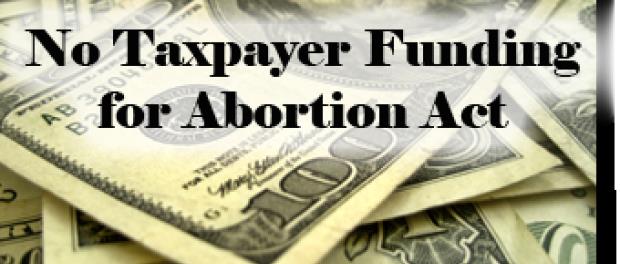
ImageThe recent “No Taxpayer Funding for Abortion Act” (NTFAA) that the House of Representatives recently passed will not likely be introduced in the Senate and, even if it was, President Obama would veto it. The Hyde Amendment already ensures that federal dollars cannot be spent on abortion. Prior versions of the NTFAA included language that introduced the political nuances to the legal term of “forcible” rape. This version is really about stopping insurance companies (private) from providing abortion coverage even though more than 80% include it with other reproductive services, including fertility services. The media knows that it will never be passed. Will coverage benefit their advertisers? No. Editors clearly decided that the coverage provided was sufficient to inform the public.

Contrast the coverage of the NTFAA to the political-conservative-initiated boycott of Girl Scout Cookies that began when the Girl Scouts supported Texas Senator Wendy Davis as someone who could be considered a Woman of the Year. Davis is pro-choice so, naturally, that means the Girl Scouts include abortion rights as part of their agenda. They actually have no position on abortion. Their agenda is developing girls into strong, independent women. Period. Role models are from all political and professional backgrounds.Image

The Girl Scout cookie boycott is newsworthy because the cookies are such an icon of Americana. Few have not had the pleasure of Thin Mints or Trefoils.  Most organizers of boycotts want news coverage.  Media did not create the news – press releases did! But, anti-abortion strategists realize that this is not the kind of news that will help their cause. That leads to the matter of branding with extremism.

 The Branding of the Anti-Abortion Movement by Extremists

Think about the purpose of news – to inform so that readers can form their own opinions. At times, the “goal to be truthful and objective can be at odds with journalistic ethics“ (Carole Rich, PracticalBioethics.org 1994). Those reporting the news must be responsible.

In the summer of 1991, when the notorious Operation Rescue was protesting outside of the clinic of the late Dr. George Tiller in Wichita, Kansas, a human fetus was pulled out of a jar to illustrate what a late term abortion produces. Responsibly, the media refused to show the dead fetus because there was no evidence that it was connected to Dr. Tiller. Neither the age nor the source of the prop could be verified. Reporting about the fetus took place but without visuals and with context provided to avoid implying that the fetus was from the clinic (Rich).

Operation Rescue was upset that photos of the fetus were not shown. Some anti-abortion groups were upset that it was reported at all because they believed that the media was conspiring to paint all anti-abortion activists as radicals.

To be fair, during the very contentious post-Roe era of Supreme Court decisions, in the late 80’s and early 90’s, the media did seem to provide more coverage of anti-abortion activities that involved violence or highly charged characteristics. Various surveys of abortion news concluded that while most likely not intentional, the pro-choice perspective had more column inches about their activities as well as more positive coverage. This prompted news organizations to initiate policies about abortion coverage that remain in place. That said, violence is newsworthy. The media doesn’t control absurd anti-abortion strategies staged for press. Through violence and shock tactics, the anti-abortion movement has branded itself. They have themselves to blame for the media coverage that they find unfavorable. By no means is it discrimination for the media to cover unusual tactics.

When conservative politicians try to justify anti-abortion legislation, they often mention that their constituencies are “everyday” people, not wild eyed religious zealots. It is hard to be convincing when, for example, a person interviewed about traveling to a protest refers to busloads of traveling companions as “die-hard Catholics” and “soldiers of Christ” or when an organizer for an event to celebrate the closing of a clinic in Missouri states that credit for the closure goes to God and those who pray daily.  Worse for politicians is when their colleagues, in promoting the anti-abortion position, discount rape or imply that the sex lives of women are the problem.  It is also challenging to justify public policy dependent on falsehoods.

No organization appreciates it when an inappropriate source is interviewed or a representative performs poorly. It happens. Among the anti-abortion representatives, there seems to be a preference for people who have no capacity to listen, an inability to be or sound reasonable, and talk over people with unproven, false talking points. In July, 2013, should the media have ignored it when former Pennsylvania Senator Rick Santorum “criticiz[ed] the media for portraying the [extremely restrictive abortion] legislation as radical instead of…part of a movement of love”? Had the media not reported, it then would have been accused of withholding media criticism from the public.

ImageThe media is not discriminating when religious zealots, ignorant politicians, and inarticulate organizers who alter or deny facts serve as contacts. Years ago, anti-abortion supporters complained that the very articulate, attractive, African American President of Planned Parenthood, Faye Wattledon, was quoted or interviewed so often. Their position was represented by James Dobson of the Family Research Council or Gary Bauer of Focus on the Family. NARAL’s Kate Michelman and NOW’s Molly Yard also spoke to the national media on the pro-choice side. Eagle Forum’s Phyllis Schlafly, National Right to Life’s John Wilkes or Wanda Franz, and religious leaders Jerry Falwell and Pat Robertson did for the anti-abortion side. Criticism about higher quality spokespeople on the opposing side was an internal issue in the anti-abortion movement – it was not discrimination.

Many of us supporting the pro-choice position are ardent supporters of free speech. We do not want a part of any discrimination towards an opposing view. It is safe to say that there is no discrimination in the news coverage of anti-abortion views or activities.

Stay tuned for Part 3, which will focus on the semantics of the abortion issue and the real discrimination that exists in the media coverage of abortion.

Abortion

Abortion

Before I embark on my next award winning column, I want to inform our readers that my co-blogger, DRK8blogginfem, is now on sabbatical.  As most of you know – especially you pro-lifers out there – she is a professor at a local college in Pennsylvania and it’s just become a matter of time management.  So, she will be on the sidelines for a bit.   Meanwhile, however, I’m pleased to report that I will soon be joined by two other bloggers – and one of them is from Ireland where things are hot and heavy.  Stay tuned.

So, Tuesday is the 40th anniversary of Roe v Wade.  I live down here in Alexandria, Virginia so by the end of the week pro-life activists will be streaming into town for their annual “March for Life” (they are marching on the weekend).   Of course, it’s more than one march.  It’s a series of prayer vigils, concerts, visits to Capitol Hill (more on that later) and protests at local abortion clinics.  A fun time will be had by all.

Abortion

Abortion

To this day, however, I do not understand how the pro-life movement has made this day theirs.  I mean, if I recall correctly January 22, 1973 was a day of liberation for millions and millions of women, wasn’t it?  It was the day that ended the era of illegal abortion.  It was a day that guaranteed that women would no longer have to resort to back-alley abortionists or self-induced abortions.  Roe v Wade saved the lives of thousands and thousands of women over the years.  Now, I know pro-lifers will point out that women have died from legal abortions and that is unfortunately true, but the number of deaths after Roe is miniscule compared to the epidemic of deaths that occurred pre-Roe.

So, how is it that the pro-choice movement never organized an annual “March for Choice?”  Well, the answer is simple.  Most people get energized when they are losing, when they are fighting FOR something.  In the case of the pro-lifers, it’s seeking an “end to abortion.”  They envision saving all of those “little babies,” giving little or no thought to the millions of women who each year feel compelled to abort.  Nope, they just love those babies and we’re the “baby killers” so let’s go to Washington, D.C. and march!

Abortion

Abortion

On the other hand, pro-choicers find themselves in the fortunate position of having to defend legal abortion and it’s harder to get people energized when you’re defending something that young people in particular have been living with all their lives.  As we have recently seen, the murder of 20 children with a semi-automatic assault weapon is a much more immediate and compelling image than the grainy black and white photos of a women lying in her own blood, the victim of a self-induced abortion in 1964.  It’s just not the same.

So, the anti-abortion crowd has basically kidnapped this day from us.  They’ll go up to Capitol Hill on Friday and hand out red roses to all of the congressional offices (we used to take them, put them in water, then bring them home to our spouses).  They’ll talk about how every woman who has ever had an abortion has regretted it and is on the verge of suicide.  They’ll talk about dismembering fetuses, partial birth abortion (which, ironically, does not dismember a fetus), Obama wanting to mandate abortion and how ObamaCare is going to force all of us to pay for abortions up to 42 weeks.  It will be the same ole, same ole.

But, damn, I wish we could take this day back!

Abortion

Abortion

I want to talk about two pro-choice people who have been in the news lately.

The first is a pro-choice activist named Ted Shulman.  It seems that this turkey recently pled guilty to making death threats against Father Frank Pavone of Priests for Life and Princeton Professor Robert George.  He could face up to 51 months in federal custody and will be sentenced on September 12.  He has called himself the “first pro-choice terrorist.”

Maybe I’m missing something here, but I’ve done some research and am bothered that I have not seen the major pro-choice groups condemning this nut ball.  For many, many years we have been quick to criticize the pro-life movement when they seem to disappear when one of their own engages in acts of violence or, if they do condemn the action, it is always with the caveat that “if the abortionist did not engage in the act of killing himself perhaps this would not have happened” or words to that effect.

Well, this pro-choicer is not going to play games with something as serious as this.  Let me for the record condemn the actions of Mr. Shulman and I hope he does serve his time.  What this guy did was wrong – period.

Abortion

Abortion

The other person I want to talk about is Nancy Keenan, the Executive Director of the National Abortion and Reproductive Rights League, who recently announced that she will be leaving the organization after the November presidential elections.

Interestingly, Nancy said she is moving on because it’s time to let the “younger folks” take over the reins.  Now, Nancy is only 60 years old which, to me at least, still seems “not very old” but she makes a good point.

Many years ago, I was the Director of Government Affairs for NARAL.  Literally two days after I joined the staff, the Senate Judiciary Committee passed a constitutional amendment overturned Roe v Wade, the Supreme Court case that legalized abortion.  During that time, millions of dollars rolled into the NARAL office and it seemed like every day we were hiring a new staff person.  Meanwhile, there were rallies all across the country, marches on Washington, television commercials.  It was a very exciting time and many younger folks were engaged in the debate.

Ultimately, we won the battle as we defeated the amendment handily.  But, once we turned back the threat to legal abortion, many of those activists left the movement and moved on to other issues.  That is ironic down side when you win something.

Then, in the ensuing years the Supreme Court, the U.S. Congress and the state legislatures started chipping away at Roe but those battles weren’t “sexy” enough to get all the troops revved up again.  There was no prominent “devil” to focus on.  On the other hand, the pro-life movement always had the fetus to keep its attention so they kept the pressure up.  Later the clinic protest movement grew bigger as some decided to take the battle to the streets, right at the spot where “babies were being killed.”

Polls can always be deceiving but generally it does appear that there are more young folks involved in the pro-life movement than the pro-choice movement.  One possible reason is that they now have their “devil” in Barack Obama, who they like to call the “most pro-abortion President in our history.”

Frankly, if I were back at NARAL, I’m not sure what I would do to try to get the younger generation more energized.  They certainly don’t remember the old days of illegal abortion and campaigns to try to remind them have failed.  Meanwhile, it’s hard to get energized about a right that they have grown up with.

Nancy has the right idea.  But she and NARAL have a tough task ahead.