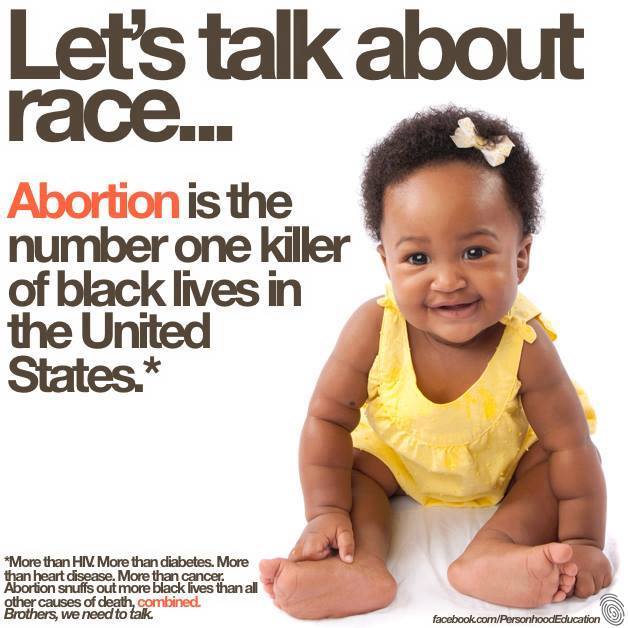
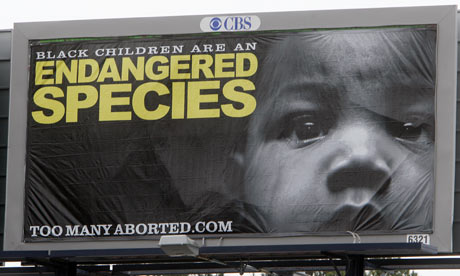
In the last several years it seems that there have been increasing efforts to portray abortion as a form of racial genocide, with pro-life institutions claiming the relatively high percentage of abortions among black and Hispanic women compared to white women is apparently evidence of some conspiracy to “kill off” minorities.

This effort has gained major traction among the general pro-life community in what appears to be an effort to appeal to the “rights” of minorities (at the same time as it advocates the restriction of women’s rights). The cry has even been taken up by certain black pundits and clergymen.

Herman Cain came under attack for blatantly false accusations he made about Margaret Sanger in 2011, when he referred to Planned Parenthood as a bastion of “planned genocide” and claimed that Margaret Sanger’s motivation for founding PP was “to prevent black babies from being born.” Pastor Clenard H. Childress, Jr, quoted as saying that “the most dangerous place for an African-American is in the womb,” founded blackgenocide.org specifically to bring awareness to the plight of black Americans under a regime of extreme genocide.

Image

It’s too bad that this genocide is completely imaginary.

The black genocide argument usually brings up one of several points:

1) Margaret Sanger was a racist and a proponent of eugenics.

Ah, the Margaret Sanger argument. Only rarely does any debate involving the merits of Planned Parenthood’s mission fail to bring up controversy over Sanger’s motives in founding it, her involvement with the eugenics movement, or something very loudly touted by pro-lifers as “the Negro Project.”

Doubts pertaining to Sanger’s supposedly racist motives usually center around one of several quotes widely disseminated on pro-life websites. First is the claim that Sanger described blacks (in some cases this is expanded to include other groups such as Jews, Catholics, and Hispanics) as “human weeds,” a term she purportedly used in her book “The Pivot of Civilization.”

Fortunately, this book is available for free online, and nowhere does it include the term “human weeds.” There is one section in which Sanger uses a similar term (“human undergrowth”) but it doesn’t actually refer to any minority. Sanger uses it as a metaphor to describe how it is unfair to blame the victims of overpopulation (the poor in particular) for “the indomitable but uncontrolled instincts of living organisms.” This is in keeping with Sanger’s career advocacy for birth control education and use.

Another quote commonly espoused by the pro-life movement to discredit Sanger is the following, disseminated widely via pro-life websites and texts as evidence that “The Negro Project” meant to annihilate the black race: “We do not want word to go out that we want to exterminate the Negro population…if it ever occurs to any of their more rebellious members.” This was taken from a letter sent by Sanger to a doctor in reference to her plans to educate black communities with sex education and to provide them birth control. It was also taken out of context, to imply the precise opposite of her meaning in the original letter. Here is the entire quote, in its full contextual glory:

“I note that you doubt it worthwhile to employ a full time Negro physician. It seems to me from my experience where I have been in North Carolina, Georgia, Tennessee and Texas, that while the colored Negroes have great respect for white doctors they can get closer to their own members and more or less lay their cards on the table which means their ignorance, superstitions and doubts. They do not do this with the white people and if we can train the Negro doctor at the Clinic he can go among them with enthusiasm and with knowledge, which, I believe, will have far-reaching results among the colored people. His work in my opinion should be entirely with the Negro profession and the nurses, hospital, social workers, as well as the County’s white doctors. His success will depend upon his personality and his training by us.


“The ministers [sic] work is also important and also he should be trained, perhaps by the Federation as to our ideals and the goal that we hope to reach. We do not want word to go out that we want to exterminate the Negro population and the minister is the man who can straighten out that idea if it ever occurs to any of their more rebellious members.”

Clearly the quote, when taken out of context, implies that Sanger’s intent was to “exterminate the Negro population.” With the context, however, it is clear that she feared her attempts to educate blacks about sex and to provide them with birth control might be perceived as an attempt to exterminate them, and so wished to hire black physicians and ministers to preemptively discourage such unwarranted suspicions.

Another effort to discredit Sanger often lies in linking her to the eugenics movement of her period.  Sanger was associated with the eugenics movement, and her appointment of several prominent members of the movement to a predecessor of Planned Parenthood might raise eyebrows, if she had given any indication that the movement targeted minorities. Sanger did support sterilization of people with low intelligence, deformity, other incapacities, and those “who have as many children as they believe they can rear” (Sanger, “Sterilization”). But her writings give no indication that she viewed blacks or other minority religious or ethnic groups as genetically inferior. She also vehemently opposed programs of forced sterility.

In “Pivot of Civilization” she writes of the merit of the eugenics movement that it is “valuable in its critical and diagnostic aspects, in emphasizing the danger of irresponsible and uncontrolled fertility of the ‘unfit’ and the feeble minded” (104). She speaks rather extensively of “the menace of the moron to human society…[a problem which requires] an immediate, stern and definite policy” (97).

Lastly, the idea that Sanger supported eugenics of any kind via abortion is simply not the case. Sanger not only never advocated for abortion whatsoever, she actually wrote against it.  An ad for the first clinic Sanger opened and secretly operated, in Brooklyn, included the text “Mothers: Can you afford to have a large family? Do you want any more children? If not, why do you have them? Do not kill, do not take life, but prevent.” The full extent of the mission of the clinics she opened was to educate and provide birth control only.

Her first clinic had to operate secretly because birth control education and the provision of contraceptives for reasons other than STIs were illegal at the time. It was forced closed by authorities and re-opened three times between October 26 and November 16, 1916, when her landlord was forced to evict her and her staff. Nonetheless, it was extremely popular during its brief stint, serving an estimated 400 patients in its first ten days.

Image

Unless the proponents of the idea that the founding of PP was a conspiracy to commit black genocide, including Herman Cain (who claimed that Sanger’s “objective was to put these centers in primarily black communities so they could help kill black babies before they came into the world”) conflate contraceptives with abortion, their case simply has no leg to stand on. It should be noted that Cain was also wrong about the locations of the clinics. The first, in Brooklyn, catered to Jewish and Irish women; the second, in Harlem, catered to a half-white, half-black clientele.

While it is important to note that the reasons used to justify Sanger’s (and, by proxy, Planned Parenthood’s) vilification are actually false, in the end they are actually irrelevant to the abortion argument today. Even if these false accusations were all true—that Sanger was a racist, that her eugenics goals targeted minorities, that she viewed minorities as “human weeds” and abortion and forced sterilization as a means to eliminate “inferior” races—it would not have any bearing on Planned Parenthood’s mission today.

It is an organization that does not discriminate based on race or ethnic background, and which provides far more STI screenings and treatment, cancer screenings, women’s health services, and contraceptives than abortions. It benefits the poor the most, with 75% of its clientele having “incomes below 150 percent of the poverty line” (“What Planned Parenthood Actually Does”).

 2) A far higher rate of abortions among black (and Hispanic) women compared to white women points to racial genocide.

It is absolutely true that Hispanic and black women have higher rates of abortion than white women. For women aged 15-44, that means an incidence of 40/1,000 for black women and 29/1,000 for Hispanic women, as opposed to 12/1,000 for white women.

Not only is it extremely disingenuous to say that this is reflective of some sort of racial genocide, it also betrays a severe lack of critical thinking ability. Portraying abortion rates as a form of racial decimation (blackgenocide.org directly compares it to slavery and to Hitler’s “Final Solution” and asks “Are we [black people] being targeted?”) necessarily assumes that the agent of action in any abortion is someone other than the mother.

This is anything but the case. Forced abortions and sterilizations are not a problem in the U.S., and it is routine medical practice to give pregnancy options counseling to women considering abortions.

Rather, the higher rates of abortion among black and Hispanic women reflect higher rates of unintended pregnancies in these groups. In addition to having more than twice as many abortions of unintended pregnancies as white women, minority women also have more than twice as many births of unintended pregnancies as white women.

Image

The unintended pregnancy rate in North America—across all subgroups—is significantly higher than that of Northern, Southern, and Western Europe, and it is the only region (counting both developed and developing regions) in which unintended pregnancy rates have not declined between 1995 and 2008. In the US specifically, rates of unintended pregnancy among poor to low-income women have increased to some of the highest levels of all subgroups, a trend that is especially troubling considering that taxpayer-funded family planning clinics only meet “about 40% of the need for publicly subsidized care” (Singh, “Unintended Pregnancy”).

The Contraceptive CHOICE study showed that when financial hurdles are removed as a barrier to care and women are educated on the relative efficacy of different birth control choices, they are most likely to use long-term methods (e.g. the IUD) which are up to 20 times more effective than short-term contraceptive methods like the pill, vaginal ring, and condom.

What do all of these things mean? For one, they mean that when given a choice and financial capability, women opt for the most efficacious birth control methods, leading to lower rates of unintended pregnancy and lower rates of abortion. It also means that many women aren’t currently given that education, that publicly funded family planning clinics don’t meet the needs of a whopping 60% of the women in income brackets at very high risk of experiencing an unintended pregnancy, and that the US has not only fallen behind most of the developed world, but has stagnated for decades in its progress addressing the needs of women–even as undeveloped nations improve.

Lastly, it means that any accusations of racial genocide are myopic and ignorant at best. The abortion rate among minorities in the US is a reflection of the unintended pregnancy rate in these populations, something that can and should be addressed not by restricting abortion but by addressing the needs of women—especially poor women and minorities. That means increased sex education and increased access to the most effective, long-term forms of birth control, both incidentally things provided by the very organization being smeared as a proponent of “genocide” in the US. It means we do have a problem, but abortion and racism aren’t at the root of it.


Sources:

 1) A Politifact Georgia article tackling Herman Cain’s remarks regarding Planned Parenthood’s mission of “planned genocide” (it got a “Pants on Fire” rating): http://www.politifact.com/georgia/statements/2011/apr/08/herman-cain/cain-claims-planned-parenthood-founded-planned-gen/

 2) The “Planned Parenthood” page of blackgenocide.org: http://blackgenocide.org/planned.html

 3) “The Demonizing of Margaret Sanger,” an entry from the blog “Fundamentalist Deceit: an American Tradition,” which goes into much more detail than I have debunking lies and edited misquotations attributed to Sanger: http://fundamentalistdeceit.blogspot.com/2008/01/demonizing-of-margaret-sanger.html

 4) A free, full online-available text of Sanger’s “The Pivot of Civilization”, which is also searchable by keywords (if anyone wishes to double-check that it does not, in fact, include the term “human weeds,” much less as a reference to blacks): https://openlibrary.org/books/OL7206135M/The_pivot_of_civilization

 5) Copy and transcript of Sanger’s letter to Dr. Gamble regarding “The Negro Project”: http://news.rapgenius.com/Margaret-sanger-letter-from-margaret-sanger-to-dr-cj-gamble-annotated

 6) The Margaret Sanger Papers Project, including information on the first clinic Sanger opened: http://sangerpapers.wordpress.com/2010/10/26/sangers-first-clinic/

 7) “Sterilization (A Modern Medical Program for Health and Human Welfare)” by Margaret Sanger, from NYU’s collection of Sanger’s public writing and speeches: http://www.nyu.edu/projects/sanger/webedition/app/documents/show.php?sangerDoc=239501.xml

 8) “Repost: What Planned Parenthood actually does, in one chart,” from the Washington Post: http://www.washingtonpost.com/blogs/wonkblog/post/what-planned-parenthood-actually-does/2011/04/06/AFhBPa2C_blog.html

 9) Guttmacher’s “Facts on Induced Abortion in the United States”: http://www.guttmacher.org/pubs/fb_induced_abortion.html

10) Finer, Zolna, “Unintended pregnancy in the United States: incidence and disparities, 2006,” Guttmacher: http://www.guttmacher.org/pubs/journals/j.contraception.2011.07.13.pdf

11) Singh, Sedgh, Hussain, “Unintended Pregnancy: Worldwide Levels, Trends, and Outcomes”: http://mpts101.org/docs/SinghSFP-UnintendedPregnancy.pdf

12) Paper detailing the results of the three year Contraceptive CHOICE project: Winner et al, “Effectiveness of Long-Acting Reversible Contraception,” New England Journal of Medicine: http://www.nejm.org/doi/full/10.1056/NEJMoa1110855


Abortion, Contraception, Rape, and Free Speech:

Stop the Politics Please
Image

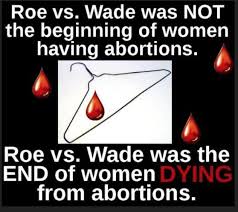
In the almost 50 years since the Supreme Court established the constitutional right to privacy for married couples through the Griswold vs. Connecticut case involving contraception for married couples and Eisenstadt vs. Baird (1972) for all individuals, it would seem that contraception would be understood as an integral part of reproductive healthcare for women. In the 41 years since the Supreme Court affirmed the right of privacy relative to reproductive decisions of the individual through the Roe vs. Wade decision, it would seem that abortion would be an accepted medical procedure for women faced with an unwanted or medically compromised pregnancy. The numerous court decisions in the decades after Roe vs. Wade (see Supreme Court Abortion Cases and Key Abortion Rulings) have affirmed abortion rights repeatedly and yet here we are, on the anniversary of Roe, with a political landscape in which a minority of elected officials, typically Republicans, prioritize abortion for their legislative legacies (see State Policies).

The politicians choose to ignore the verified experiences of reproductive health complications before Roe (see Repairing the Damage, Before Roe) in the United States or what is happening globally as factually reported by the New York Times, World Health Organization, and Guttmacher Institute. Instead, they grandstand women who regret their abortions and mislead the public with terms like “post-abortion syndrome” that no professional medical or mental health organization recognizes, and fairly addressed by the American Psychological Association.

There are women who regret abortions just as there are women who regret childbirth and adoption choices; no legislator would ever get away with identifying the latter two regrets as pervasive syndromes. What is most striking is that the first point of contact suggested for women suffering from the supposed syndrome is none other than a Crisis Pregnancy Center – nonprofits established to dissuade women from choosing abortion. While medical practices that provide abortions must meet rigorous government and professional standards, CPCs are not required to be staffed with medically trained personnel. They are unregulated and the one certification many of them acquire is from the Evangelical Council for Financial Accountability which is committed to “establishing and interpreting standards of accountability that are biblically based”. They do not share scientifically or medically verified information; they impart information that is steeped in religious and personal perspective.

Particularly disturbing are the other issues that have become part of the abortion debate over the past 41 years.

Rape laws – and perceptions of rape –have become murky. If anti-abortion legislators allow abortion at all, it is for rape – which they are also redefining – and maybe incest (see “Legitimate Rape”, “Men Defining Rape: A History”, and “Rape Pregnancies are Rare”). Anti-abortion legislators, with the help of material from organizations such as Georgia Right to Life, minimize rape or pregnancy resulting from rape.  The fetus is far more important than the rape victim in their world.

Some would argue that a generally bizarre cultural attitude about rape has evolved among Republicans. The recent statement by Virginia State Senator Dick Black that “spousal rape is not a crime” or Michigan lawmakers discussing the option of abortion insurance in their healthcare program in the event a woman gets pregnant from rape is abhorrent.  Texas anti-abortion legislator Jodie Laubenberg dismissed the need for a rape exception to a restrictive abortion proposal, claiming that rape kits “clean out” women.

So frequent the Republican comments about rape and abortion are, a website was established to track the comments. It indeed appears as if many Republicans have a goal to further stigmatize rape so that women will return to a time in which underreporting and unfair scrutiny of the victim were the norm and all claims about pregnancy resulting from rape were questioned. The perception many political moderates have of the Republicans is that their ongoing references to rape when abortion is discussed implies that they have a basic distrust of any woman who claims to have been raped and certainly any woman who claims that her pregnancy resulted from rape. A Mother Jones summary of the rape related commentary from politicians across the country during 2013 can be found here.

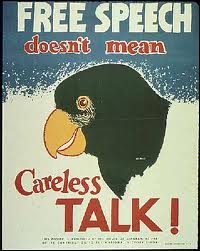
Free speech is another area that has become front and center in the abortion debate, especially over the past ten years or so. Last Imageweek the Supreme Court heard arguments in a Massachusetts case in which anti-abortion activists claim that restricting protesters to a 35-foot buffer zone impedes their free speech. As a fierce advocate of free speech I want anti-abortion people to have the right to express their views. I genuinely believe that all issues achieve a certain balance in large part due to the ability of all views to be heard. I am torn, however, on their right to “in-your-face” share selective, or outright incorrect and unscientific, information with patients who did not ask them for their view. These protesters claim to be “counselors” seeking to share information about abortion alternatives.  In my own experience and observations of more than three decades, “counseling” is not what happens. Nonconsensual delivery of harsh judgments and rhetoric about the choice of abortion is what is typically conveyed.

There are indeed some protesters who are kind, gentle, and truly express their convictions about abortion in a meaningful way. But, no one asked them to do so. As an editorial in a Boulder publication stated, “Unless you consent to it, no one can run up scream in your face that you shouldn’t be getting your Viagra any more than they counsel you from obtaining birth control…” Would this “sidewalk counseling” be protected speech, or tolerated at all, if it concerned some other medical procedure, like plastic surgery or immunizations, both of which can invite controversy? What is okay ever about showing up at a medical practice to talk with people you think are patients? Specific to abortion clinic buffer zones, there is a public interest to be served by upholding the current Massachusetts law. If the zones are removed, women will be prevented from exercising their constitutional right to abortion if they do not feel that they can enter the clinic safely or comfortably. Period. At the moment, the anti-abortion speech is protected – there is nothing interfering with the protesters praying loudly, holding graphics depicting their views, or being heard. The only difference to their prior speech is that the buffer zones appear to have impeded them from forcing their unrequested, nonconsensual “sidewalk counseling” on patients entering the clinic.

Continuing with free speech, how ironic is it that anti-abortion/anti-contraceptive people want restrictions placed on sharing abortion information with indigent women (Rust vs. Sullivan), advertising reproductive healthcare, sharing family planning information with high school students, using established medical protocol to inform abortion patients about the procedure, and the like, but they don’t believe they should be restricted in any way whatsoever in their efforts to dissuade women from obtaining an abortion by stating falsehoods about abortion?Image

Anti-abortion politicians want to enjoy free speech to the extent that it conveys their personal and religious opinions through laws dictating what abortion providers must say to patients and yet they oppose the inclusion of medical facts if the facts are not aligned with their views. So many of these politicians seem to think that upon election to office, they acquire medical degrees; they know exactly what doctors should say to abortion patients through scripted dialogues, such as that in South Dakota, or forced and narrated ultrasounds like the one thankfully just struck down in North Carolina. A Missouri state Senator’s social media rant that late term abortions are for convenience more often than to protect the life or health of the mother is an example of a politician wanting his free speech protected as he attempts to stifle the facts another person tried to convey about late term abortion. The saddest aspect of it all is that these politicians expect their views to be included as fact in public policy debates and proposals.

Time and again Republican lawmakers claim to want smaller government. Some even claim that they oppose President Obama’s Affordable Healthcare Act because they “don’t think the government should be in between you and your doctor.”  This issue can begin in Texas. As you read this post, there is a family grieving over the loss of their loved one, Marlise Munoz, who was declared brain dead in late November. Because she was 13-15 weeks pregnant at the time of her death, the hospital determined that despite the wishes of her family, she must be kept on life support technology (see The Cruelest Pregnancy) due to the abortion law enacted in Texas in 2013. Small government, eh? I guess this case also illustrates how much Texas wants the government out of the doctor-patient relationship — unless it involves a fetus, regardless of probable outcome for that same fetus.

It is acceptable that many oppose abortion or contraception on the basis of their personal religious or moral views, which are different than mine and roughly half of all other Americans. Unbiased polling consistently illustrates that most of us want abortion to remain legal; whatever variations exists in the conditions placed on legal abortion, most do not want Roe vs. Wade overturned (see Abortion and Birth Control polling). I understand and respect strong opinions and convictions. I do not understand the form of absolutism that imposes one set of convictions on others.

The United States has continuously grappled with costly court cases, polarized debate often void of indisputable scientific facts and full of outrageous claims, and public policy proposals that are frequently deceptive and attached at the last minute to unrelated legislative packages or bills. In recent years, state legislatures have introduced a myriad of anti-abortion laws – in 2011 a whopping 92 were proposed! During 2013, almost 50 new restrictions were placed on abortion in 17 different states by midsummer, with other restrictions making it through one court or another. Make no mistake; the efforts at the state level are ultimately targeting Roe vs. Wade. The constitutional right to abortion may continue but as all readers here are aware, if there is no access, what exactly is the right?

On this 41st anniversary of the Roe vs. Wade decision, it would be fitting for pro-choice people to take a look back and ask how such extensive erosion to abortion rights happened? How did rape and free speech become so intertwined with the politics of abortion that we now see the public manipulated at times by the anti-abortion messaging? It is time to stop the politics and return to the facts alone. The anti-abortion politicians, if you think about it, have given the pro-choice cause a few gifts with their ridiculous behaviors, proposals, and words. Now is a good time to begin reversing the damage that happened as so many of us thought the Constitution and the courts offered protections.

Well, suppose it’s time for me to give the obligatory “Year in Review” report on abortion rights.    

I’ve always been a bit of an optimist when it comes to the future of Roe and access to abortion, but I’m not so sure anymore.  Sure, when it comes to the basic right to abortion, we’re still in decent shape in the Supreme Court.  They don’t have the votes to overturn Roe.  But all we need is an anti-abortion President to be elected in 2016 and, without the threat of a filibuster (thanks to the Democrats in the Senate), it may be a little more difficult to stop an extremist from being appointed to the Court.   And, depending on which legal authority you subscribe to, all the antis need is maybe one vote to reverse Roe.  Indeed, I really wish some of the older more liberal justices would resign now so Obama can at least make those seats secure.

But when it comes to access issues, there is no doubt the anti-abortion movement is on a legislative roll.  In 2013 alone, 22 states adopted 70 different restrictions, including late-abortion bans, doctor and clinic regulations and limits on the use of the abortion pill. Twenty-four states have barred abortion coverage by the new health exchanges and nine of them forbid private insurance plans, as well, from covering most abortions. A dozen states have barred most abortions at 20 weeks of pregnancy, based on a theory of fetal pain that has been rejected by major medical groups. Such laws violate the viability threshold and have been struck down in three states, but proponents hope the Supreme Court will come up with a new standard.

What’s most frightening, however, are the laws that on their face seek to “protect the health of women seeking abortions” by imposing severe regulations on the clinics.  Such regulations include absurd requirements like mandating that hallways be a certain width (to get the gurney out when a woman has an emergency).  Personally, I have never heard of a patient getting stuck in a hallway and it might not sound like a big deal to some to widen the hall, but when you think about how much it might actually cost to get the necessary permits, hire construction crews, etc., it’s an onerous and very expensive proposition.   Some of the new laws also require the clinic to provide more parking spaces, as if that’s an easy thing to do, especially in a more urban environment. 

We know that this is all a bunch of crap, that the antis do not give a hoot about making the abortion experience “safer,” but the anti-abortion legislators, like those in my home state of Virginia, are buying it. They just get their marching orders from their local “Right to Life” chapter and vote in lock step.  Chalk up another victory for “women’s health!” 

But, truth be told, these regulations are starting to severely restrict access to abortion services.  For example, there is now only one clinic left in the state of Mississippi and in North Dakota and both of them are hanging by their fingernails in the face of a legislative onslaught led by the local anti-abortion forces. 

The bottom line is that more and more clinics are closing and women are now travelling further to get abortions.  Please note what I said – many of them are STILL getting abortions, even if it means having to miss several days of work to travel to another state.  On the other hand, many other women are simply deciding to give birth to an unwanted child instead of losing three days of pay. 

The only thing we can hope for is that ultimately there will be a backlash in this country on the political front and there is some evidence that that may be occurring.  For example, right here in Virginia we recently elected an outspoken pro-choice Governor who will hopefully reverse some severe clinic regulations that were passed two years ago that threaten the existence of several clinics in the state. And the National Abortion and Reproductive Rights Action League points to other recent successes on the political front.

Let’s hope it is not too late.

This one is too good to be true.

It seems that a bunch of anti-abortion folks are suing an abortion rights group for posting online private, confidential contact information of anti-abortion advocates who protest or offer abortion alternatives at local abortion clinics.

Yep, I’m not making this up.  An attorney named Steven Tiedemann has filed three suits in Federal and State Court against “Voice of Choice,” its founder Todd Stave and its current director Wendy Robinson.   Attorney Tiedemann represents anti-abortion people who allegedly have been “injured” by VOC’s “Bully List,” which lists abortion clinic protestors, complete with their photo, their personal address, email address and phone numbers.

Can you believe this crap?  I mean, let’s go back in time for a second here. 

Remember in the 1990’s when a guy named Neal Horsley created something called the “Nuremberg Files,” which was a compilation of names, pictures, etc. of abortion doctors, clinic staff and other pro-choice leaders?   Some called it a “hit list” and, indeed, whenever a doctor on the list was murdered, Horsley put a red “x” through that doctor’s picture.  Nice, huh?    

Remember years ago when anti-abortion activists would stand outside the clinics and write down the license plates of the doctors, staff and even the patients and, armed with that information, went down to the local Department of Motor Vehicles and legally retrieved the home addresses of those parties?  Then, that information was put on flyers, copied a few thousand times and distributed throughout the anti-abortion network in that town.   A short while later, staff and patients received death threats at their very home or, worse, the protestors wound up on their front yard. 

And in the case of Todd Stave, one of the defendants in the suit, the antis actually picketed the school that his daughter attended and the office of Stave’s landlord.     

So, now Stave is fighting back and the antis are whining about it. 

The lawsuit alleges that “the clear purpose of VOC is to mount a harassing calling/email campaign against those listed as ‘Bullies.’”   The suits allege that VOC, Robinson and Stave encourage and provide instructions to their followers to call and email anti-abortion protesters repeatedly in order to halt the anti-abortion protests. 

Geez, I wonder where Todd learned how to do this? 

Go get ‘em, Todd.   

Our new friend?

Our new friend?

Something really interesting happened recently at the U.S. Supreme Court.

For those of you who failed high school social studies, let me remind you that for a case to reach the Supreme Court, four members of the Court must agree to grant a “writ of certiorari.”  This is otherwise known as the “Rule of Four.”    

Now, several years ago the state of Oklahoma, in all of its wisdom, enacted the cleverly titled “Oklahoma Ultrasound Act” that required a physician or certified technician to perform an obstetric ultrasound on the pregnant woman, using either a vaginal transducer or an abdominal transducer, whichever would display the embryo or fetus more clearly for a woman that desired an abortion.  The technician would also have had to provide a simultaneous explanation of what the ultrasound is depicting, display the ultrasound images so that the pregnant woman may view them and describe the presence of organs if viewable.

A state trial court struck down the statute and later the Oklahoma Supreme Court upheld that decision.  Then, Oklahoma Attorney General Scott Pruitt, a Republican, decided to appeal that decision to the U.S. Supreme Court.  The one thing that most people do not understand is that when a state appeals any cases, it actually costs the taxpayers a bunch of money because of the expensive legal process.   Don’t get me started on that issue.

So, at some point this case was considered by the justices of the U.S. Supreme Court.  They all meet in a private room and there is absolutely no record of the proceedings.  The Chief Justice simply asks the justices to vote on whether or not to grant cert in the thousands of cases before them. 

Truth be told – I was not in that room.  But I will bet the ranch that the Court’s extreme right wing – Scalia, Alito and Thomas – voted to grant cert.   But the next day, the Court announced that it was not granting cert to this abortion-related case, no doubt shocking a lot of people and ticking off the anti-abortion movement.   The decision to not review the case upheld the Oklahoma Supreme Court’s decision striking down the statute. 

So, what happened?

No doubt that the liberal wing of the Court – Kagan, Sotomayor, Ginsberg and Breyer – voted to not grant cert.  And Justice Kennedy, who is always a swing vote on the issue, probably just decided he’d had enough of abortion cases for the time being so he joined the liberals.

That leaves Justice Roberts, an anti-abortion conservative who could have been the fourth vote.

Thank you, Justice Roberts???    

Abortion Care Network

Abortion Care Network

I recently received an email from a woman named Peg Johnston, an old friend up in Binghamton, New York who has been running an abortion facility for many years.  She has seen it all:  the murders, the bombings, the protests with hundreds of people at her front door.  And, like so many of her colleagues, she has persevered.

For many years, she was one of my closest confidants when I was the Executive Director of the National Coalition of Abortion Providers.  We went through a lot together and, yes, I was a pain in the ass to her at times (or maybe a lot of times).   After I left NCAP, she helped transform the organization into what is now called the Abortion Care Network.

In the early years, NCAP was a Capitol Hill lobbying effort that represented independent abortion providers.  To this day, I take pride knowing that we actually got three laws passed that provided protection to the doctors, staff and patients who use these facilities.  Later, NCAP started focusing on the business side of the industry, putting together group purchasing plans, business conferences, etc.  What really got my juices flowing, however, was NCAP’s effort to de-stigmatize abortion.  And I was pleased when I received Peg’s email to see that the Network continues to fight to make abortion more acceptable in this country.

Abortion Care Network

Abortion Care Network

It’s hard to believe that after 40 years of legal abortion, the procedure is still shrouded in mystery, spoken only in whispers.  Millions and millions and millions of women have availed themselves of this procedure but so many of them still sit by in silence.  And that has allowed the anti-abortion movement to fill in the blanks, to demonize abortion and to make women feel ashamed for having them.

But Peg and her group continue to press the envelope.  She and her colleagues have seen women come into their facilities, leave and move on with their lives.  They continue to insist that “good women have abortions” and that abortion is “okay.”  They also believe – and they taught me – that the pro-choice movement needs to speak more honestly about the abortion procedure.  They argue that women are not stupid, that they know exactly what goes on during an abortion and it is an insult to obfuscate.  “We Trust Women,” is their catch-phrase.

Whether or not the Abortion Care Network or, for that matter, NCAP has had an impact is hard to tell.  But I can tell you personally that it sure felt good not having to worry about trying to avoid the “A” word and just putting it out there.  Sure, our candor pissed off our pro-choice colleagues at times, but we slept well at night knowing we were telling the simple truth and that, by doing so, we were lifting the veil of secrecy about abortion.

And now Peg and the Abortion Care Network are on to their next project in their never-ending battle to make abortion more acceptable in this country.  Below is a link that announces a new video contest they are sponsoring, which speaks for itself.   I encourage everyone to submit their videos, to speak out if you’ve had an abortion and, yes, to send money to the Abortion Care Network:

  http://events.r20.constantcontact.com/register/event?oeidk=a07e880uqfe81765aa0&llr=rrbrm5cab

Abortion

Abortion

Imagine what it is like to be 14 and pregnant. Not now, but in 1976. No adult to confide in or ask for advice because to confide in someone would mean admitting that you had had sex. Whatever culture of sex, drugs, and rock ‘n roll was underway, as the daughter of a military officer, you were supposed to be chaste. The concern about what people would think was greater than the concern about being pregnant. The fear of informing your parents was even greater. Your mother was a depressed alcoholic who you did not want to give another reason to drink. Your father once left welts up and down your legs and back because you cut a class. Your 19-year-old boyfriend offered to marry you and, what seemed to be spoken at the same time, asked if you thought about abortion. You knew that your family would be moving more than an ocean away within three weeks. There was little time to sort things out.

Few of us can know what we would do in many situations until we have been there. And, once there, we are challenged to be strong and thoughtful as we also challenge our moral views of whatever the situation. Almost 40 years later, I can vividly recall each emotional moment of what I just asked you to imagine. It was challenging and heartbreaking to be so young and alone.

Abortion Rights

Abortion Rights

Abortion had been legal for three years but legal did not mean accessible, especially for minors. None of the family planning places I called could provide an abortion nor could they even see me because of my age. A friend I finally confided in told me about a woman who could perform an abortion on me for $500. Her house – where she performed the abortions – was filthy.  I was smart enough to know that the abortion option was not safe and marriage was not the right response to the pregnancy. The only thing I knew for sure was that I was going to have a baby.

As the “new girl” at a middle school, I stood out in no small part because I looked at least potentially pregnant. I denied my pregnancy to a guidance counselor who questioned me.  I successfully feigned fatness to my parents and siblings, thanks to the full and flowing smock tops girls wore then. Halfway into my third trimester, my parents confronted me. I still denied I was pregnant. After insisting that I visit an obstetrician, we were all informed that I would deliver a baby within a couple of months. In less than a week, an adoption agency caseworker met with me at school. She treated me to lunch or dinner on a weekly basis, always trying to convince me to “stop being selfish” and give my baby up. I refused. By then I had in fact bonded with the child I was carrying.  I was following recommendations for in-utero nurturing that I read about in the Boston Women’s Health Collective Our Bodies Ourselves. I was religiously taking the prenatal vitamins the OB gave me and I even attended two childbirth classes before I gave birth.

Those who would have encouraged me to give birth, because abortion was wrong, would never have considered that my son was placed in a foster home because my parents refused to let me bring him home. They would not have prepared me for my parents deceptively adopting the son I fought so hard to keep and had lovingly mothered – the son they so vehemently objected to my keeping. Once the social workers convinced my parents that foster home was not a good long term alternative, my son came home and they fell in love with him. So much so that when my father knew he was going to be relieved from military service, and they would move to another state, they told me that they had to adopt my son in order for him to have medical care. I signed the papers without separate counsel or knowledge of the pending move. Not long after that, my father informed me that they were moving, my son was now their responsibility, and that they knew I wanted to stay put (even though, at 16, I only had a car).  To a powerless 16-year-old who lived in fear of her father, the message was clear: you are on your own and without your child.

No anti-abortion person could have prepared me for living in a car in Ft. Lauderdale, or in Central Park in New York City, or what it was like to survive without a family or support system and, most of all, without the child I deeply loved and cared for. I could not have been prepared for what it felt like to show up at my parents’ place several years later to see my beloved child living in a house without indoor plumbing and the same parents with the same problems that marred my childhood. I only mention those things here because all too often when people learn I had a child so young, I am complimented for how well I turned out…or some comment like, “See? It can be done…the pro-choice people always make the choice of life seem so doomed…”

What I really what to share here is that it is 2013 and yet, in terms of abortion rights for young women, it feels like it is 1976 all over again. Don’t read into this that I absolutely would have chosen abortion had it been accessible. Consider instead that I had the option to illegal abortion – and so will young women throughout the country as states further erode abortion rights. Consider that no matter how much more acceptable sexual activity or teen pregnancies are in our culture, we provide minimal education and support for either. Most striking in that regard is that the very people striving to criminalize abortion are at the same time thwarting educational and support services for young people and their tiny offspring.

No choice is an easy choice when a pregnancy is unplanned. Abortion is not a viable or appropriate choice for all women. Adoption has a seedy side that some of us know all too well. Motherhood is best when both the mom and the child are adequately supported by society. If you oppose abortion, think hard before you judge one more woman for thinking abortion is the more moral choice. We really don’t know what we’d do in a given situation until we are there.

GOP Insanity

GOP Insanity

Our government is in turmoil.  The national parks are closed, veterans may not get their well deserved benefits and if you’re a tourist who just arrived in our capital, well, you can still go to a movie.  The entire D.C. government is closed, which actually might not be a bad thing.  It’s a mess and there’s no relief in sight.

As we all know by now, the government shutdown is a result of a group of obnoxious, I-don’t-care-about-governing, right wing Republicans who are still whining about the Affordable Health Care Act which, for PR purposes, they have dubbed “Obamacare.”   Personally, I don’t think that is such a terrible name because I choose to read it as saying that “Obama cares.’  But that’s beside the point.

The Republican Party and, specifically the Tea Partyers, are now upset because they say the AHCA was shoved down their throat, that they had no say in the matter, that they were “bulldozed” by that legislative powerhouse, Nancy Pelosi.  Of course, these charges totally discount the fact that in the House and Senate subcommittee, the House and Senate full committee and the floor of both houses, the Republicans were able to offer dozens upon dozens of amendments to the bill.  One count says they offered at least 500 amendments to the bill.  They offered them, they were debated they generally lost.  And now they want a do-over, government be damned.

GOP Insanity

GOP Insanity

They also say that Obama never listened to them.  (If I were clever enough, I would insert right here a picture of a screaming infant).  Obama never listened, huh?  How soon we forget.

Hey, what about that big brouhaha over the abortion issue?  Remember when anti-abortion groups and legislators started screaming that under Obamacare the federal government would be able to pay for abortions, thus running counter to the long-standing “Hyde Amendment,” which prohibits federal funding of abortions in most cases?   Remember Democratic Congressman Bart Stupak, who wanted to support the healthcare bill but was anti-abortion and shared the same concerns about the use of federal funds.  He offered an amendment that was adopted by the House of Representatives that made clear that no federal dollars could be used for abortion but a similar provision was defeated in the Senate.  Stupak then announced that he and several other Democratic representatives who supported health reform legislation but opposed abortion would not vote for the final version of the legislation unless clarifying language was put forward.  The ensuing controversy made Stupak “perhaps the single most important rank-and-file House member in passing the bill.”

Then the poop hit the fan with the abortion rights group.  They held rallied all over the country.    They were outraged that the President would even think about compromising.  But what did President Obama do?  I guess he could have threatened to shut down the government if he did not get his way but instead he and Stupak reached an understanding and the President ultimately signed an Executive Order barring federal funding of abortion through the AHCA.  Stupak and several of his allies then supported the bill.  Anti abortion groups subsequently accused Stupak of betraying the pro-life movement and ran $150,000 worth of radio advertisements against him. In April 2010, Stupak announced his intention to retire from Congress.

The bottom line is that this is one stark example where the President LISTENED and compromised, acceding to the wishes of the anti-abortion movement (although it did not assuage them).  It’s very convenient that the Republican Party has now forgotten about Bart Stupak.